 EVERY CROCHET
 Crochet garment 5 rounds No account, no download
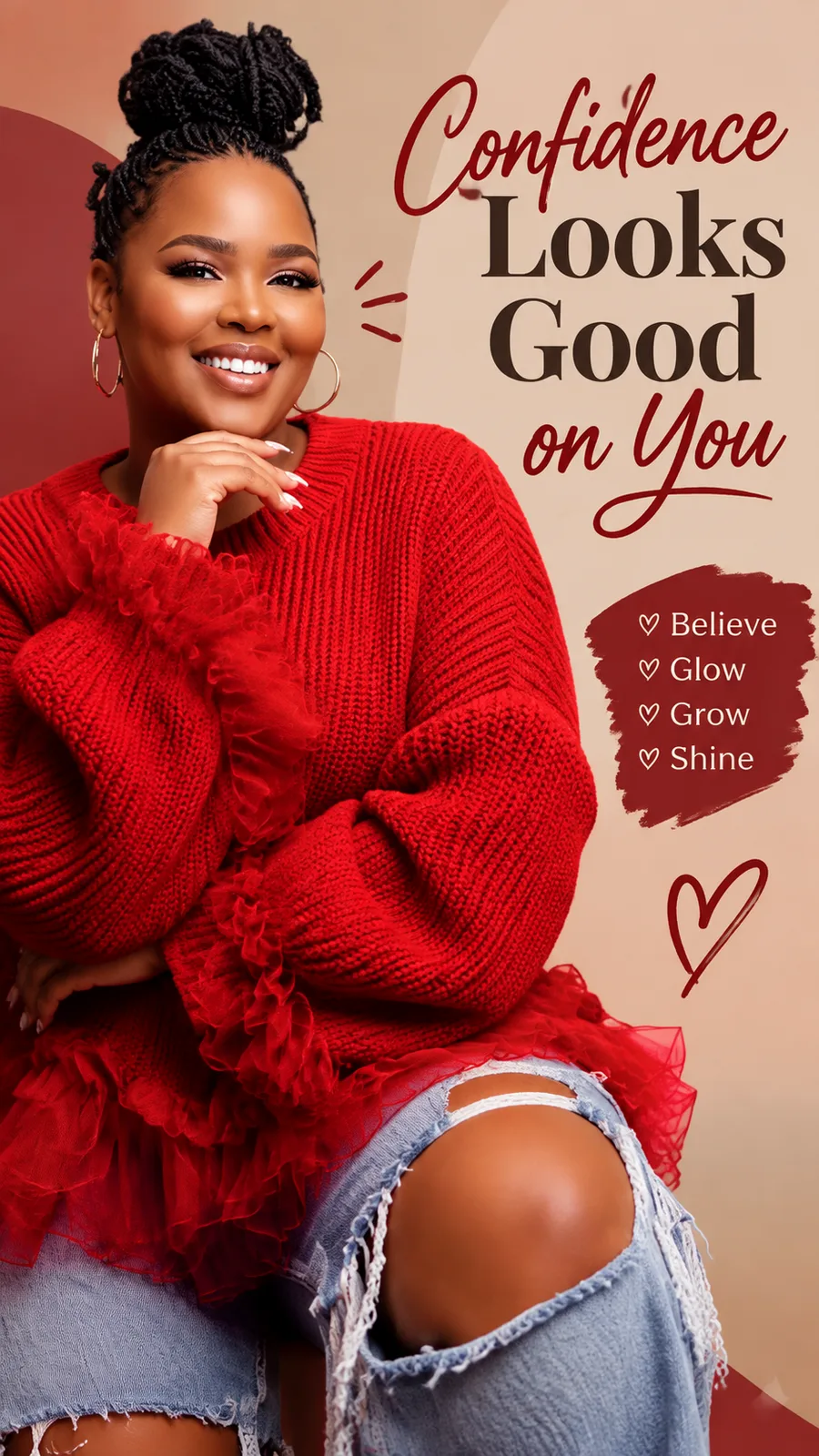
A textured red crochet sweater for oversized autumn layering
Oversized red crochet sweater using half double crochet and front post stitches, written in US crochet terms, finished with a gathered
- Skill
- Intermediate
- Time
- 10-14 hours
- Yarn weight
- Bulky
- Hook
- 6.5 mm

Intermediate
What the original write-up called it. Nothing here is graded again.

Bulky
What the sample was worked in. Any weight works; the size moves with it.

10-14 hours
What the original page reckoned. Your own pace is the one that matters.
About this pattern
This is an oversized red pullover made from bulky yarn, using half double crochet and front post stitches for texture, finished with a gathered ruffle hem. The front and back are flat rectangular panels about 24 inches long; sleeves are crocheted separately with built-in increases, then all pieces are seamed. A 6.5 mm hook and roughly 1,600 yards of yarn are needed, suited to confident beginners to intermediate crocheters.
This red crochet sweater belongs to the half double crochet family, with front post stitches worked in to raise vertical lines across the fabric. The oversized, dropped-shoulder shape and bold red shade make it a statement layering piece rather than a close-fitting garment. Combined with a gathered ruffle hem, the stitch pattern gives a soft, ribbed texture without the bulk of true ribbing, so the finished fabric drapes rather than clings.
The sweater is built from separate flat panels rather than worked in the round: a back panel, a front panel, and two sleeves are each crocheted on their own and joined afterwards. Shaping at the neckline and shoulders is worked into the rectangular panels rather than through continuous increases, and the pieces are seamed together using mattress-style seams or a simple whip stitch. The ruffled lower edge is added last, worked by increasing stitches into an existing row to create the gathered effect.
Materials
- Bulky weight (category 5) yarn in red, soft acrylic or wool blend: approximately 1,600 yards (1,463 meters)
- 6.5 mm US K-10.5 crochet hook
- Yarn needle
- Scissors
- Stitch markers
- Tape measure
The list is the pattern's own wording.
Instructions
Every round is printed as the pattern wrote it, brackets and all. Open the key beside a round to see only the short forms that round uses.
Back Panel
Chain 70.
- Row 1
Hdc in second chain from hook and across. Turn. (69 sts)
Key1
- hdc
- half double crochet
- Row 2
Ch 1, hdc across. Turn. (69 sts)
Key2
- hdc
- half double crochet
- ch
- chain
- Row 3
Ch 1, hdc in first 3 sts, fpdc around next st, hdc in next 3 sts. Repeat across. Turn. (69 sts)
Key4
- fpdc
- front post double crochet
- hdc
- half double crochet
- ch
- chain
- st
- stitch
- Row 4
Ch 1, hdc across. Turn. (69 sts)Repeat Rows 3 and 4 until the panel measures approximately 24 inches (61 cm).Fasten off.
Key2
- hdc
- half double crochet
- ch
- chain
Sleeves
Chain 38.
- Row 1
Hdc in second chain from hook and across. Turn. (37 sts)Rows 2 to 32: Work textured stitch pattern, increasing one stitch at each end every 8 rows.Final count after increases: approximately 45 sts.Fasten off.
Key1
- hdc
- half double crochet
Special Stitch
Textured Stitch: Alternate one row of hdc with one row of fpdc and hdc combinations to create raised vertical texture.
Ruffle Edge: Work 2 dc into each stitch around the lower edge to create a gentle gathered effect.
Front Panel
Repeat the back panel instructions until the piece measures 20 inches (51 cm).
Next row: Work across 22 sts, leave the next 25 sts unworked for neckline, work remaining 22 sts.
Work each shoulder separately for 4 rows.
Fasten off and repeat for the second shoulder.
Ruffled Bottom Edge
Attach yarn at the lower edge of the sweater. Work one round of hdc evenly around the hem. Next round, work 2 dc in each stitch around. Join with a slip stitch and fasten off.
Making up
- Step 1Place front and back panels together with right sides facing.
- Step 2Seam shoulders using a whip stitch, leaving the neckline open.
- Step 3Attach sleeves evenly along the arm openings.
- Step 4Fold sweater with wrong side facing out and seam sides and sleeves.
- Step 5Weave in all yarn ends securely.
Notes from the pattern
- A 6.5 mm (US K-10.5) hook is used throughout; swatching the textured stitch pattern first is worthwhile, since front post stitches pull the fabric in more tightly than plain half double crochet.
- Stitch markers are useful for flagging the start of each row in the Row 3 and Row 4 repeat, so the three-hdc, one-fpdc sequence stays aligned as the back and front panels grow.
- Because the panels are measured to length (24 inches) rather than a fixed row count, checking progress against a tape measure regularly helps the front and back panels come out matching.
- roughly 1,600 yards needed for the full garment, tracking yarn used per section before starting the sleeves and ruffle helps confirm there is enough left to finish.
- Finished size is an oversized medium fit, approximately 46 in (117 cm) bust circumference; the pattern is written in US crochet terms, with a gauge of 12 hdc x 8 rows = 4 x 4 inches (10 x 10 cm), so swatching before starting is worthwhile since fit depends heavily on stitch tension.
- The sweater is worked in five main sections: back panel, front panel, two sleeves, and the bottom ruffle; turning chains do not count as stitches unless noted, and slip stitches are not counted as stitches.
- To resize, reduce or increase the starting chain in multiples of 2 stitches for a smaller or larger sweater, add extra rows before fastening off for longer sleeves, or work fewer body rows for a cropped style; measure the wearer across the fullest part of the bust and add 8 to 12 inches (20 to 30 cm) of positive ease for the relaxed fit.
- Crochet garments should always be measured against the intended wearer throughout construction, since small changes in tension can significantly change the sweater's width and sleeve length.
The essentials
- Rounds
- 5
- Parts
- 5
- Level
- Intermediate
- Time
- 10-14 hours
- Hook
- 6.5 mm
- Yarn
- Bulky
Stitches you will use
- Front post stitches Used in the textured rows of the back panel to raise vertical lines; work around the post of the stitch below rather than into the top loops, and keep tension even so the panel does not pull in.
- Flat-panel seaming The back, front, and sleeve panels are joined afterwards with mattress-style seams or a whip stitch; matching row counts between panels before seaming keeps the shoulders level.
- Increase-based ruffle edging The lower edge is gathered by working two double crochet into each stitch around; spacing the increases evenly avoids a lopsided or uneven ruffle.
Troubleshooting
The textured ribs drift out of alignment row to row.
This happens when the front post stitch is worked around the wrong stitch below. Place a marker at the start of the repeat and count the three hdc before each fpdc to keep the columns straight.
The ruffle hem looks tight rather than gathered.
A tight ruffle usually means the two-dc increase was missed in some stitches around the lower edge. Work back through the final round and check that every stitch received two double crochet.
The two sleeves end up different lengths or widths.
This comes from the increases at each end not landing on the same row in both sleeves. Note the row number each increase is worked on the first sleeve and repeat it exactly on the second.
Panel sizes come out uneven.
Count stitches at the end of every row; losing stitches along the edges can create uneven seams and affect the final fit.
Substituting yarn
- Aran or worsted weight wool or wool blend
- Produces a lighter, more draped sweater; a smaller 5 to 5.5 mm hook is needed, more total yardage is required to cover the same panel sizes, and the post-stitch texture reads less pronounced.
- Chunky weight acrylic
- A close substitute for the bulky yarn specified, keeping the 6.5 mm hook and similar yardage; the fabric is a little stiffer and less breathable than a natural fibre.
- Cotton-blend bulky yarn
- Gives a heavier drape suited to transitional layering; cotton's lower elasticity makes the front post stitches sit flatter, and a slightly larger hook may be needed to match the stated gauge.
Washing and care
- Hand washing in cool water, or gentle machine washing inside a protective bag, is recommended depending on the chosen fibre; high heat should be avoided in both washing and drying.
- Dry flat away from direct heat, easing the ribbed texture and ruffle back into shape while still damp, then store the sweater folded rather than hung so the bulky fabric does not stretch out of shape.
- Light blocking helps relax the stitches and improve the overall shape before assembly: lay each piece flat, gently stretch it to the intended measurements, and allow it to dry completely.
FAQs
Questions
Why does the pattern measure the panel to 24 inches instead of giving a fixed row count?
Row tension varies between crocheters working the same hook and yarn, so the back and front panels are worked to a target length rather than a set number of rows. Checking length periodically with a tape measure keeps both panels the same size before seaming.
Can both sleeves be worked at the same time?
Working the sleeves side by side, row for row, makes it easier to keep the increases lined up every 8 rows. Keeping a written tally of rows worked is a simple way to avoid one sleeve ending up longer or wider than the other.
Is the ruffled hem difficult for a less experienced crocheter?
The ruffle is a single round of working two double crochet into each stitch around the lower edge, rather than an ongoing stitch pattern to track. The main thing to watch is working into every stitch evenly so the gather looks consistent all the way round.
How is the oversized fit achieved without a size chart?
The relaxed fit comes from the panel dimensions given: a chain of 70 for the back and front panels worked to a 24-inch length, with sleeves built from a starting chain of 38 stitches. Swatching gauge first is the simplest way to adjust the finished size up or down.
Does the stated 1,600 yards cover the whole sweater, including the sleeves and ruffle?
Yes, the approximate 1,600 yards is calculated for the complete garment: the back panel, front panel, both sleeves, and the ruffled hem. Tracking yarn used per section as the project progresses helps confirm there is enough left before starting the ruffle.
These answers came from whoever first published the pattern, kept word for word.