 EVERY CROCHET
Pet Accessories 14 rounds No account, no download
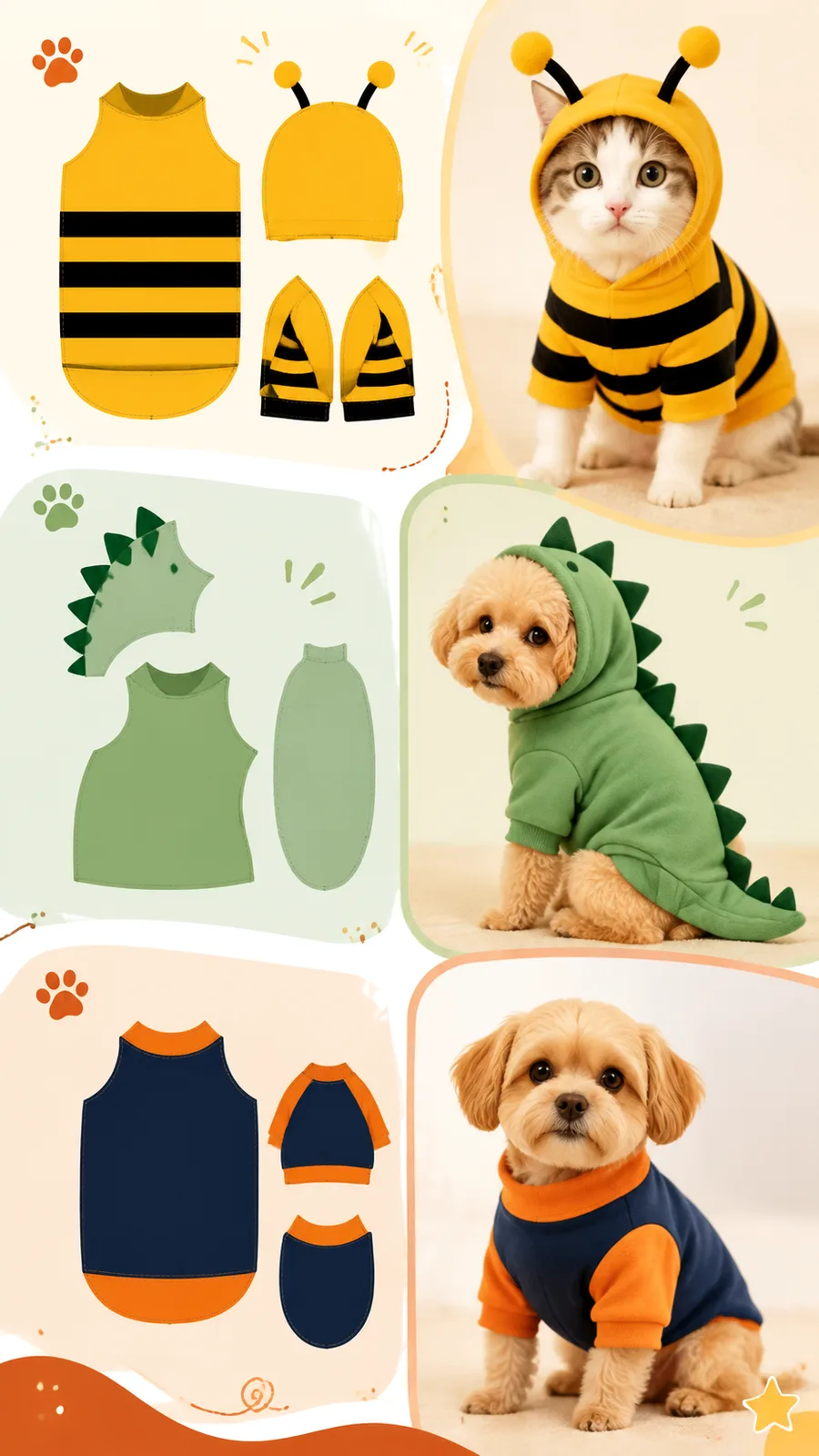
Striped half double crochet dog sweater costume
A striped crochet dog sweater costume pattern worked in half double crochet (UK half treble) using US crochet terms, complete with
- Skill
- Intermediate
- Time
- 4-6 hours
- Yarn weight
- Worsted
- Hook
- 5 mm

Intermediate
What the original write-up called it. Nothing here is graded again.
Worsted
What the sample was worked in. Any weight works; the size moves with it.
4-6 hours
What the original page reckoned. Your own pace is the one that matters.
About this pattern
This is a crocheted pet sweater costume worked mainly in half double crochet (UK half treble), with single crochet edging at the neck and sleeves. The body is built top-down in joined rounds with gradual increases, leg openings are shaped by chaining over skipped stitches, and two sleeves are added separately. It uses worsted weight yarn in three colours, a 5 mm hook, and suits confident beginners comfortable with joined rounds and basic shaping.
This dog costume sweater belongs to the half double crochet family, known in UK pattern terms as half treble crochet. The stitch gives the body a warm, balanced fabric that is neither as open as single crochet nor as tall as double crochet, which suits a garment meant to sit close to a pet's torso. Single crochet edges, worked at the neck and sleeve openings, firm up those areas so the costume holds its shape where it meets the body.
The body begins at the neck and is worked downward in joined rounds, increasing gradually over the main pattern's 8 rounds to open out space for the chest. Leg openings are shaped partway through by chaining across skipped stitches, and sleeves are added afterward as separate short joined-round panels attached at those openings. Decorative colour sections and any optional details are worked in last, once the main shaping is complete.
Materials
- Worsted weight acrylic or cotton blend yarn in main color A
- Contrast colors B and C for stripes
- 5 mm US H-8 crochet hook
- Yarn needle
- Stitch marker
- Scissors
- Small amount of stuffing if adding optional costume details
The list is the pattern's own wording.
Instructions
Every round is printed as the pattern wrote it, brackets and all. Open the key beside a round to see only the short forms that round uses.
Main Pattern
Construction notes: the body is worked in joined rounds. Turning chains do not count as stitches. Slip stitches are used only for joining and do not count toward stitch totals. Use a stitch marker if you prefer to track the first stitch of each round.
- Round 1
With color A, ch 36. Join with sl st to first ch, being careful not to twist. Ch 2, hdc in each chain around. Join. (36 hdc)
Key4
- sl st
- slip stitch
- hdc
- half double crochet
- ch
- chain
- st
- stitch
- Round 2
Ch 2, hdc in each stitch around. Join. (36 hdc)
Key2
- hdc
- half double crochet
- ch
- chain
- Round 3
Ch 2, (hdc in next 5 sts, inc in next st) repeat 6 times. Join. (42 hdc)
Key4
- hdc
- half double crochet
- inc
- increase, 2 hdc in same stitch
- ch
- chain
- st
- stitch
- Round 4
Ch 2, hdc around. Join. (42 hdc)
Key2
- hdc
- half double crochet
- ch
- chain
- Round 5
Change to color B. Ch 2, hdc around. Join. (42 hdc)
Key2
- hdc
- half double crochet
- ch
- chain
- Round 6
Ch 2, (hdc in next 6 sts, inc in next st) repeat 6 times. Join. (48 hdc)
Key4
- hdc
- half double crochet
- inc
- increase, 2 hdc in same stitch
- ch
- chain
- st
- stitch
- Round 7
Change to color A. Ch 2, hdc around. Join. (48 hdc)
Key2
- hdc
- half double crochet
- ch
- chain
- Rounds 8–12
Continue alternating colors every 2 rounds. Ch 2, hdc in every stitch around. Join. (48 hdc)
Key2
- hdc
- half double crochet
- ch
- chain
Sleeves
Make 2 sleeves.
Attach color A around one leg opening.
- Round 1
Ch 2, work 18 hdc evenly around opening. Join. (18 hdc)
Key2
- hdc
- half double crochet
- ch
- chain
- Rounds 2–4
Ch 2, hdc around. Join. (18 hdc)
Key2
- hdc
- half double crochet
- ch
- chain
- Round 5
Ch 1, sc around. Join. Fasten off.
Key2
- ch
- chain
- sc
- single crochet
Leg Opening Shaping
Lay the sweater flat and mark 10 stitches on each side for front leg openings.
- Round 13
Ch 2, hdc across until first marker. Skip 10 stitches, ch 10, hdc across back section, skip 10 stitches, ch 10, join. (48 hdc including chains)
Key2
- hdc
- half double crochet
- ch
- chain
- Round 14
Ch 2, hdc in each stitch and chain space around. Join. (48 hdc)
Key2
- hdc
- half double crochet
- ch
- chain
- Rounds 15–17
Ch 2, hdc around. Join. Fasten off.
Key2
- hdc
- half double crochet
- ch
- chain
Special Stitch
Half double crochet increase: Work two half double crochet stitches into the same stitch.
Half double crochet decrease: Yarn over, insert hook into next stitch, yarn over and pull up a loop, insert hook into following stitch, yarn over and pull up a loop, yarn over and pull through all loops.
Neck Edging
Attach yarn around neckline.
Work 2 rounds of sc evenly around the opening.
Join with sl st and fasten off.
Making up
- Step 1Weave in all loose ends with a yarn needle. If adding optional costume details such as ears, spikes, bows, or patches, crochet those separately and sew them securely onto the sweater.
- Step 2Block lightly using steam or gentle shaping to even out stitches. Avoid stretching the garment too much because pet clothing should maintain its natural shape.
Notes from the pattern
- Use the 5 mm (US H-8) hook consistently across the main body, sleeves, and edging so the leg openings and sleeve panels meet up without puckering.
- Place a stitch marker at the first stitch of each round from Round 1; because slip stitches only join and do not count as stitches, losing track of the round start is the most common way to miscount.
- If adding optional stuffed decorative details, use only a small amount so the attached pieces stay soft and do not pull the main body out of shape.
- Finished size is approximately 12 inches long by 10 inches chest circumference (30.5 cm x 25.5 cm), at a gauge of 14 hdc x 10 rows = 4 x 4 inches (10 x 10 cm); check your gauge before starting since a looser or tighter tension will change the finished size.
- You will need approximately 180 yards (165 meters) of worsted weight yarn in total across the main color and both contrast colors.
- Measure your dog before starting; pet clothing should allow comfortable movement around the chest, neck, and front legs, and a slightly relaxed fit is usually more comfortable than a tight costume.
- Avoid adding loose buttons, beads, or small detachable decorations to pet clothing; decorative pieces should be securely attached and checked regularly.
The essentials
- Rounds
- 14
- Parts
- 5
- Level
- Intermediate
- Time
- 4-6 hours
- Hook
- 5 mm
- Yarn
- Worsted
Stitches you will use
- Working joined rounds without turning Used throughout the main body from Round 1 onward; keep the join consistent each round so stripe colour changes line up neatly.
- Shaping increases evenly spaced in a round Round 3 spaces increases every 5 stitches across the round; miscounting here throws off the stitch total needed for later rounds.
- Chaining over skipped stitches for an opening Round 13 skips 10 stitches and chains 10 to form each leg opening; the following round works into both stitches and chain spaces, so count carefully to stay at the stated total.
Troubleshooting
The costume feels too tight
Increase the chest circumference rather than only adding length.
Stripes come out uneven
Change colors at the same joining point every round so the colour breaks line up.
Leg openings stretch
Add an extra round of single crochet edging for stability.
Body twists
Make sure joined rounds are not accidentally turned.
Substituting yarn
- Worsted weight cotton blend
- Produces a firmer, less stretchy fabric that holds its shape well for display but has less give around the chest; keep the same 5 mm hook.
- Chunky weight acrylic
- Produces a larger, cosier costume with fewer rounds needed for the same coverage; move up to a 6 mm or larger hook and expect any optional stuffed details to look puffier.
Washing and care
- Hand wash the finished costume gently or follow the care label for the acrylic or cotton blend yarn used, since machine washing can felt cotton blends or distort the hdc fabric.
- Reshape the piece while still damp, paying attention to the leg openings and neck edging, then lay flat to dry completely before storing or placing it on a pet.
FAQs
Questions
Is half double crochet the same as UK half treble?
Yes, US half double crochet and UK half treble crochet refer to the same stitch. This pattern uses the US term throughout, with the UK name given once for clarity.
Can the costume be sized up for a larger dog?
Yes. For a larger dog, increase the starting chain by multiples of 6 stitches; for a longer body, add extra hdc rounds before shaping the leg openings. For a smaller pet, reduce the starting chain while maintaining the same stitch pattern.
Why are the sleeves worked separately instead of in one piece?
The sleeves are attached after the leg openings are shaped, working short joined rounds directly around each opening. This keeps the main body's increases clean and allows the sleeve length to be adjusted independently.
What is the stitch marker actually tracking?
Since slip stitches used for joining do not count toward the stitch total, the marker tracks the first true stitch of each round. This prevents confusion when counting toward figures like the 42 hdc or 48 hdc totals given in the pattern.
Does the costume need stuffing to hold its shape?
No, the main structure relies on the hdc fabric and shaping rounds rather than stuffing. A small amount of stuffing is only needed if adding optional decorative details.
These answers came from whoever first published the pattern, kept word for word.