 EVERY CROCHET
 Accessories 6 rounds No account, no download
Simple Single Crochet Headband Pattern In Multiple Colours
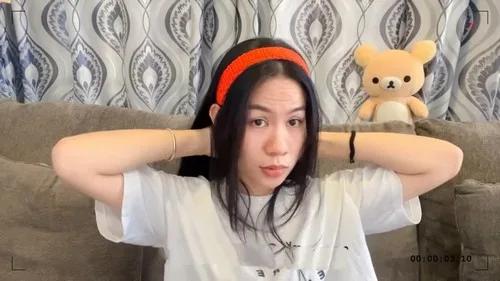
A single crochet (UK double crochet) headband worked flat in rows, shaped with decreases and finished with tie straps.
- Skill
- Beginner
- Time
- 4-6 hours
- Yarn weight
- 5 Ply
- Hook
- 3.5 mm

Beginner
What the original write-up called it. Nothing here is graded again.

5 Ply
What the sample was worked in. Any weight works; the size moves with it.

4-6 hours
What the original page reckoned. Your own pace is the one that matters.
About this pattern
This is a flat, single crochet (UK double crochet) headband made from a nine-chain foundation worked in straight rows for sixty-eight rows, then shaped with decreases at row sixty-nine. Two seventy-chain straps are added at the ends and trimmed to fit. The project uses cotton yarn with a 3.5 mm hook and suits a confident beginner comfortable with turning chains and simple decreases.
This headband is a flat strip worked entirely in single crochet (double crochet in UK terms), the same dense, even stitch used for coasters and amigurumi bodies. Because every row repeats the same stitch, the fabric stays firm without curling, which matters for a band that needs to lie flat against the head rather than cup or ripple. The narrow nine-chain foundation keeps the width modest, so length builds through repeated rows rather than through widening stitches.
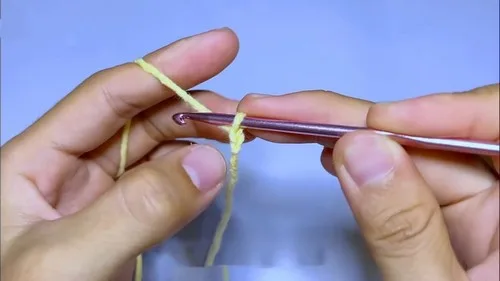
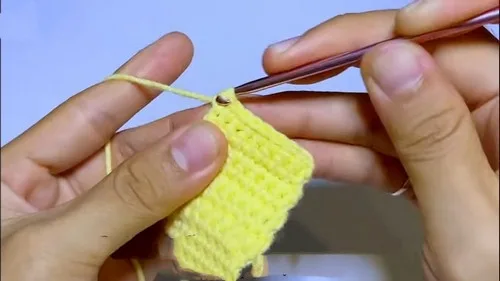
Construction begins with a slip knot and a nine-chain foundation, then proceeds in straight single crochet rows, turning with a chain 1 at the end of each one, for sixty-eight rows. At row sixty-nine the pattern begins shaping, working paired decreases to taper the end before two seventy-chain straps are added, one at each end, and later trimmed to a comfortable tying length.
Materials
- Cotton yarn, 125g (5 ply)
- 3.5 mm crochet hook
- Scissors
- Yarn needle
- Marker (optional)
The list is the pattern's own wording.
Instructions
Every round is printed as the pattern wrote it, brackets and all. Open the key beside a round to see only the short forms that round uses.
Main Pattern
- Round 1
Skip the first chain. Single crochet (sc) in the next chain and in every chain across.
Key1
- sc
- single crochet
- Round 2
Chain 1 (ch 1), turn your work. Single crochet (sc) in every stitch.
Key2
- ch
- chain
- sc
- single crochet
- Round 3
68 Chain 1 (ch 1), turn your work. Single crochet (sc) in every stitch. Repeat the same process for each row.
Key2
- ch
- chain
- sc
- single crochet
Shaping the Headband
- Round 69
Chain 1 (ch 1), turn your work. Decrease crochet, single crochet 1; repeat this twice.
Key1
- ch
- chain
Decrease crochet.
For Row 70 Chain 1 (ch 1), turn your work.
Decrease crochet, single crochet 1, decrease crochet.
- Round 71
Chain 1 (ch 1), turn your work. Decrease crochet, single crochet 1.
Key1
- ch
- chain
- Round 72
Chain 1 (ch 1), turn your work. Decrease crochet to other side, repeat same thing.Finishing Touches First Strap Make 70 chains.Repeat the process for the other side: Connect the yarn.Start with chain crochet 1 (ch 1), single crochet 1; repeat this twice.Single crochet 1, turn your work.Decrease crochet, single crochet 1.
Key1
- ch
- chain
Decrease crochet.
Chain 1 (ch 1), turn your work.
Decrease crochet, single crochet 1.
Second Strap Make 70 chains to create another strap.
This will be cut to make it look beautiful and form the final aesthetic of the headband.
Making up
- Step 1First Strap: Make 70 chains.
- Step 2Repeat the process for the other side: Connect the yarn.
- Step 3Start with chain crochet 1 (ch 1), single crochet 1; repeat this twice.
- Step 4Single crochet 1, turn your work.
- Step 5Decrease crochet, single crochet 1.
- Step 6Decrease crochet.
- Step 7Chain 1 (ch 1), turn your work.
- Step 8Decrease crochet, single crochet 1.
- Step 9Second Strap: Make 70 chains to create another strap.
- Step 10This will be cut to make it look beautiful and form the final aesthetic of the headband.
Notes from the pattern
- The 3.5 mm hook is sized for the 5 ply cotton yarn; a bigger hook will loosen the fabric and a smaller one will make the long rows slow going.
- A marker is optional but useful for counting through sixty-eight identical rows before the shaping at row sixty-nine, where it is easy to lose track.
- Cotton has very little give, so keep tension even across all rows; a tight row next to a loose one will show clearly in a flat band this narrow.
- The 125g ball is intended to cover the full headband plus both seventy-chain straps, so there is little slack for reworking large sections.
The essentials
- Rounds
- 6
- Level
- Beginner
- Time
- 4-6 hours
- Hook
- 3.5 mm
- Yarn
- 5 Ply
Stitches you will use
- Single crochet (UK double crochet) Used for every row of the main band; keep tension consistent row to row so the strip stays the same width throughout its sixty-eight rows.
- Turning chain A chain 1 opens each new row after the foundation; watch that it is not mistaken for a stitch, which would widen the band unevenly.
- Paired decrease (sc2tog) Used at row sixty-nine to taper the headband end; space the two decreases evenly across the row so the taper sits symmetrically.
Troubleshooting
The band curls or ripples along its length instead of lying flat.
This usually comes from tension tightening or loosening across the sixty-eight main rows; keep the same grip throughout and block the finished strip gently to flatten it.
The two straps end up different lengths.
Each strap starts from its own seventy-chain foundation, so an uncounted chain on one side is the likely cause; recount against the seventy-chain total before crocheting into it.
The shaped end at row sixty-nine looks lopsided rather than evenly tapered.
This happens when the two decreases in that row are not placed symmetrically; work the single crochet stitches between them evenly so the decrease falls in the same position on each repeat.
Substituting yarn
- Cotton, DK or worsted weight
- Produces a wider, thicker band from the same nine-chain start and sixty-eight rows; move up to a larger hook and expect less drape than the 5 ply original.
- Wool or wool-blend, 5 ply
- Adds warmth and a little stretch to the band, which can soften the shaping at the decrease rows; the 3.5 mm hook should still suit this weight.
- Acrylic, 5 ply
- Keeps the same hook size and row counts but trades the cotton's crisp structure for a slightly softer, more elastic fabric that is easier to machine wash.
Washing and care
- Hand wash the cotton headband in cool water and lay it flat to dry, since cotton holds shape poorly if wrung or hung wet and can stretch out of its sixty-eight-row length.
- Store flat rather than folded tightly, and smooth the band back into shape by hand after washing rather than stretching it, since cotton does not spring back on its own.
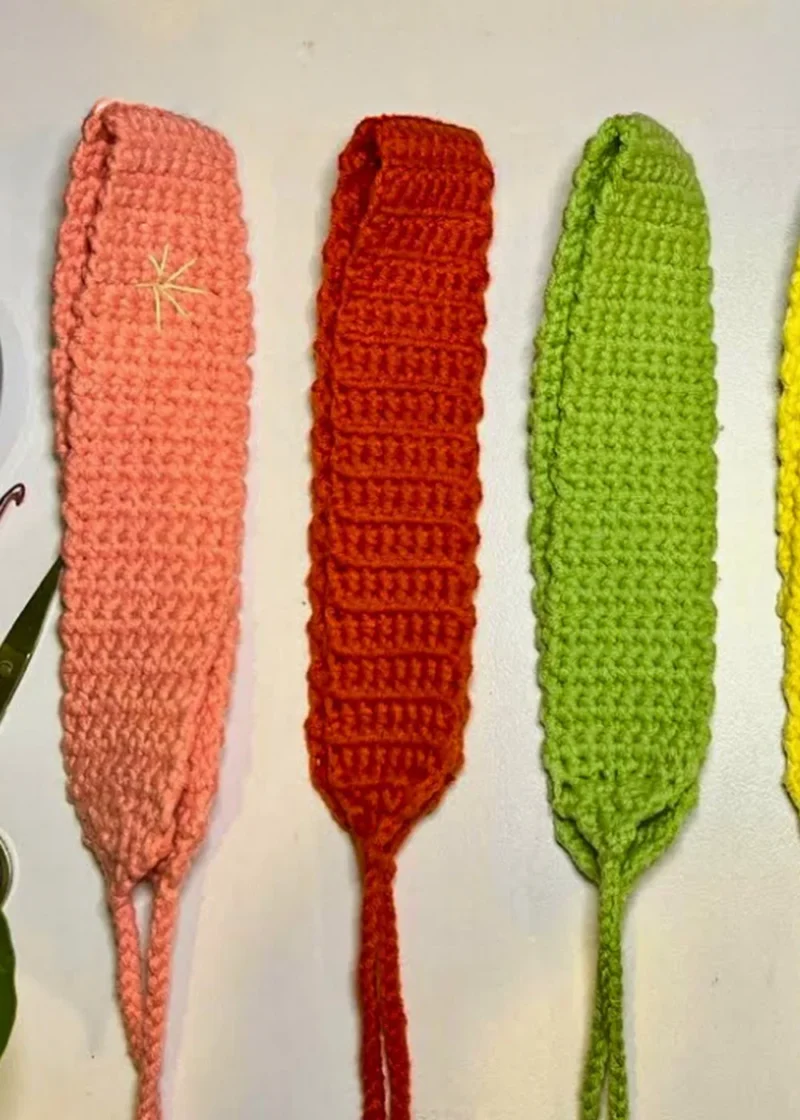
The photographs taken while this was being made
Every one was taken by whoever published the pattern, in the order the source listed them.
FAQs
Questions
How long is the finished headband before the straps are added?
The main band comes from sixty-eight straight rows plus the shaping at row sixty-nine, all built on a nine-chain foundation. The straps are added separately afterwards and are not part of this main length.
What do the seventy chains at each end become?
Each set of seventy chains forms a long strap at one end of the headband, worked and then trimmed to the length needed for tying. Both straps are made the same way, one per side.
Can the decrease rows at row sixty-nine be skipped?
Skipping them leaves the headband end square rather than tapered, which changes how the strap sits against the band. The decreases are what shape that end before the strap is attached.
Is 125g of cotton enough to finish the whole piece?
Yes, the 125g ball listed in the materials is intended to cover the main band and both seventy-chain straps. There is little yarn left over, so it is worth working steadily rather than unpicking large sections.
Why does the pattern mention both single crochet and double crochet?
Single crochet is the US term and double crochet is the UK term for the same stitch used throughout this headband. The pattern itself uses the US term, so the UK name is noted here for readers working from UK instructions.
These answers came from whoever first published the pattern, kept word for word.