 EVERY CROCHET
 Blankets 3 rounds No account, no download
Granny stripe blanket pattern for autumn warmth
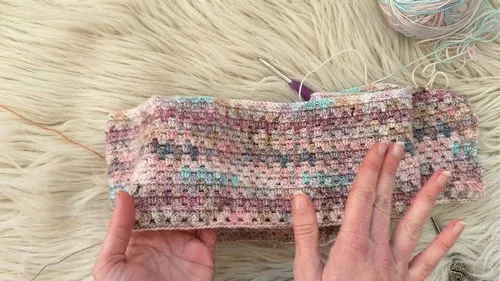
A double crochet (UK treble) granny stripe blanket, worked in both US and UK stitch terms.
- Skill
- Intermediate
- Time
- 4-6 hours
- Yarn weight
- DK
- Hook
- 4 mm

Intermediate
What the original write-up called it. Nothing here is graded again.

DK
What the sample was worked in. Any weight works; the size moves with it.

4-6 hours
What the original page reckoned. Your own pace is the one that matters.
About this pattern
This is a granny stripe blanket worked flat in rows from a chain multiple of 3 plus 2. A single crochet setup row is followed by two alternating rows of three-double-crochet clusters, repeated until the blanket reaches the desired size. It uses a 4mm hook with cotton DK yarn, or any substitute weight the hook is adjusted to match, and suits a confident beginner ready to work cluster stitches and simple colour changes.
This blanket belongs to the granny stripe family, built almost entirely from the double crochet (UK treble) stitch worked in clusters of three rather than the tighter, all-round shape of a classic granny square. Each row reads as a soft ridge of colour, which is what gives the finished piece its characteristic banded look and makes it a forgiving project for practising colour changes.
Construction starts from a foundation chain set to a multiple of 3, plus 2 extra chains, followed by a setup row of single crochet (UK double crochet) worked into that chain. From there, alternating rows build the stripe pattern: one row places 3-dc clusters by skipping two stitches at a time, and the next works those same clusters directly into the gaps left between the clusters below, so the fabric grows as a stacked, open lattice rather than a solid piece.
Materials
- Cotton DK weight yarn (or any yarn of your choice)
- 4 mm crochet hook (adjust hook size according to your yarn)
The list is the pattern's own wording.
Instructions
Every round is printed as the pattern wrote it, brackets and all. Open the key beside a round to see only the short forms that round uses.
Main Pattern
Converted from the designer's UK terms to US terms.
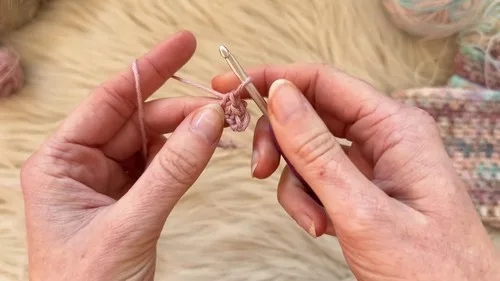
Foundation chain: make a slip knot, then chain in multiples of 3 (chain 21 for this demonstration, or a longer length as desired for a blanket), plus an extra 2 chains at the end, so the foundation chain is a multiple of 3, plus 2.
To continue the blanket, repeat Rows 2 and 3, adjusting color changes as desired, until you reach the desired size.
- Row 1
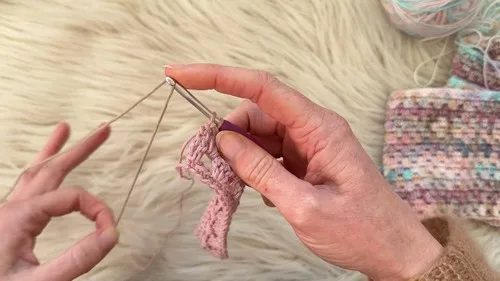
Setup Row Work a sc into the second chain from the hook; continue working sc all the way along the chain; finish the row with a sc in the last chain.
Key1
- sc
- single crochet
- Row 2
Pattern Start Chain 3 (counts as the first dc), turn your work; work a dc directly underneath the turning chain; skip the next two stitches and work 3 dc into the third stitch; continue this pattern along the row, skip 2, work 3 dc into the next stitch, until you reach the end; in the last stitch, work 2 dc to mirror the beginning of the row.
Key1
- dc
- double crochet
- Row 3
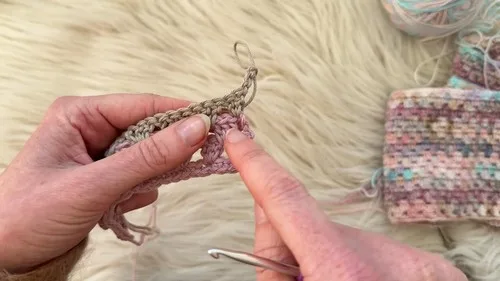
Chain 3, turn your work; instead of starting in the stitch at the bottom of the chain, work 3 dc into the space between the 3-dc clusters from the previous row; repeat this pattern along the row, working 3 dc into each space between dc clusters from the previous row; finish the row by working 1 dc into the top of the turning chain from the previous row; if changing colors, loop the new color onto your hook and complete the stitch with the new color.
Key1
- dc
- double crochet
Notes from the pattern
- The 4mm hook suits cotton DK as listed; swap to a different yarn weight and size the hook up or down until the stitch height and cluster width feel comfortable to work.
- Keep the foundation chain to a multiple of 3, plus 2 chains, since the cluster repeat in Rows 2 and 3 depends on that exact count to land evenly at both edges.
- Cotton DK has less give than wool, so keep tension relaxed through the 3-dc clusters; pulling them tight makes the blanket stiff and the stripe texture less pronounced.
- colour changes, loop the new shade onto the hook to finish the last stitch of the row rather than after starting the next chain, which keeps the colour break at the row edge rather than mid-stitch.
The essentials
- Rounds
- 3
- Level
- Intermediate
- Time
- 4-6 hours
- Hook
- 4 mm
- Yarn
- DK
Stitches you will use
- Working 3-dc clusters with a two-stitch skip Appears throughout Row 2; keep the skip count consistent or the cluster spacing drifts and the stripe edges stop lining up.
- Working into the space between clusters Central to Row 3; the hook goes into the gap left by the previous row's clusters, not into a stitch top, which is easy to miss on a first pass.
Troubleshooting
The side edges pull in and the blanket
This usually means the 2-dc mirror stitch at the end of Row 2 rows was skipped or worked as a single stitch; check that both edge stitches are present each row.
The stripe clusters look staggered
Row 3 clusters need to sit in the space between the previous row's clusters, not on top of a stitch; recount the gaps if the columns start drifting sideways.
The colour change leaves a visible knot
This happens when the new colour is added after finishing the stitch rather than during its last pull-through; loop the new colour on to complete the final stitch of the row as instructed.
Substituting yarn
- Acrylic, worsted weight
- Produces a heavier, warmer blanket with firmer stitch definition; move up to a 5mm–6mm hook to keep the cluster stitches from becoming dense.
- Wool or wool-blend, DK weight
- Keeps a similar drape to the original cotton but adds more stretch and warmth; the 4mm hook still works well, though tension may need to loosen slightly.
- Bamboo-cotton blend, DK weight
- Gives a softer, more fluid drape than pure cotton with a similar stitch size; the same 4mm hook applies, and the finished piece will hang slightly heavier.
Washing and care
- Cotton DK can generally be machine washed on a gentle, cool cycle; avoid high heat in the dryer, as it can shrink or stiffen the stitch clusters.
- Dry the blanket flat rather than hanging it, easing the granny stripe rows back into shape while still damp, and store it folded in a dry place to keep the stripes lying evenly.
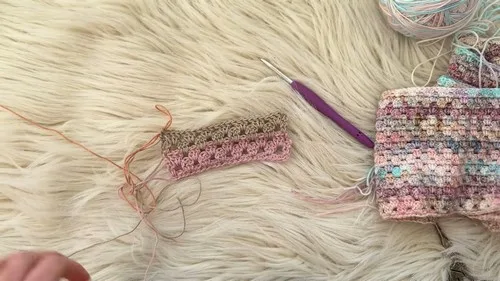
The photographs taken while this was being made
Every one was taken by whoever published the pattern, in the order the source listed them.
FAQs
Questions
Can the blanket be made larger than the sample size?
Yes. Extend the foundation chain in multiples of 3, plus the extra 2 chains, and repeat Rows 2 and 3 for as many rows as needed to reach the desired size.
What does the foundation chain need to add up to?
It needs to be a multiple of 3 plus 2 extra chains, since the cluster pattern in Rows 2 and 3 repeats in groups of 3 stitches across the row.
How are colours changed between stripes?
Loop the new colour onto the hook to complete the final stitch of the row, rather than starting the new colour on the next row; this keeps the colour break sitting neatly at the row edge.
Can a different yarn weight be used instead of cotton DK?
Yes, any yarn weight works if the hook size is adjusted to suit; a heavier yarn will need a larger hook and will produce a thicker, warmer blanket.
Why does the pattern mention both single crochet and double crochet if it is UK-sourced?
The pattern has been converted from UK to US stitch terms, so single crochet here is the UK double crochet, and double crochet here is the UK treble; check which convention is familiar before starting.
These answers came from whoever first published the pattern, kept word for word.