 EVERY CROCHET
 Stitch Patterns 7 rounds No account, no download
How to crochet the Catherine Wheel stitch pattern
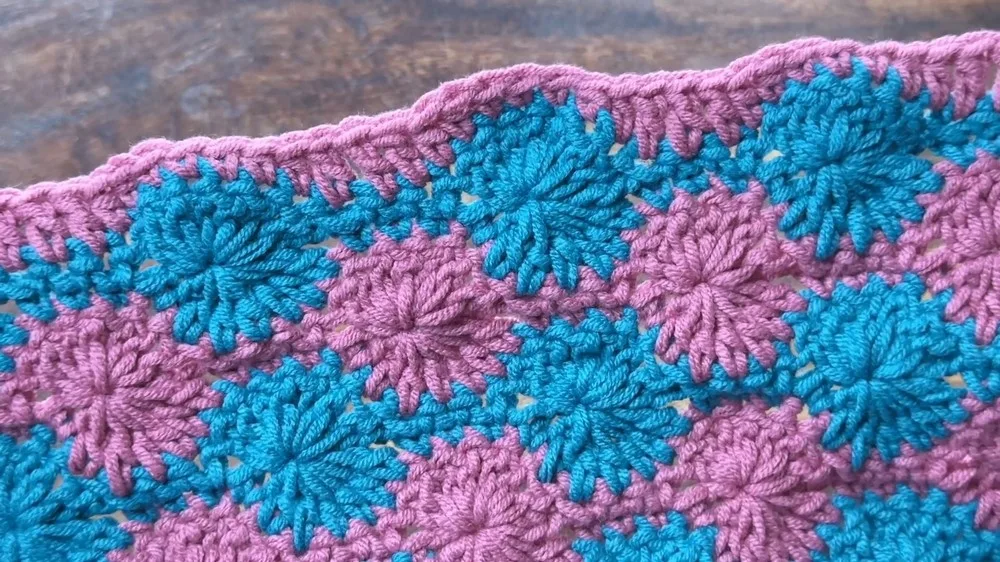
How to crochet the Catherine Wheel stitch pattern: fan clusters of seven double crochets alternating with dc7tog decreases, worked flat in
- Skill
- Intermediate
- Time
- 4-6 hours
- Yarn weight
- Worsted

Intermediate
What the original write-up called it. Nothing here is graded again.

Worsted
What the sample was worked in. Any weight works; the size moves with it.

4-6 hours
What the original page reckoned. Your own pace is the one that matters.
About this pattern
This is a textured shell-stitch pattern worked flat in rows, alternating clusters of seven double crochets with a seven-stitch decrease to form repeating fan shapes, finished with a shaping edge row. It suits any weight of yarn with a matching hook, and Rows 2 to 5 are simply repeated until the piece reaches the desired length before working the final edge row, making it a flexible-length project for a blanket panel, scarf or similar flat piece.
The Catherine Wheel stitch belongs to the shell and fan stitch family, where clusters of double crochets fan out from a single base stitch to create a repeating scalloped texture. The result reads as a series of overlapping wheels or fans across the fabric, making it a popular choice for blankets, scarves and other pieces where a strong visual repeat is the point rather than a plain surface.
Construction works in straight rows rather than in the round. Each row alternates between building up the fan shapes with clusters of seven double crochets and collapsing them back down with a decrease worked across seven stitches at once (dc7tog), which pulls the fabric in to form the narrow point between wheels. A final row of mixed single, half double and double crochets smooths this uneven top edge into a level finish.
Materials
- Yarn of various weights and textures
- Crochet hook suitable for your yarn choice
The list is the pattern's own wording.
Instructions
Every round is printed as the pattern wrote it, brackets and all. Open the key beside a round to see only the short forms that round uses.
Foundation Chain & Row 1
- Foundation Chain
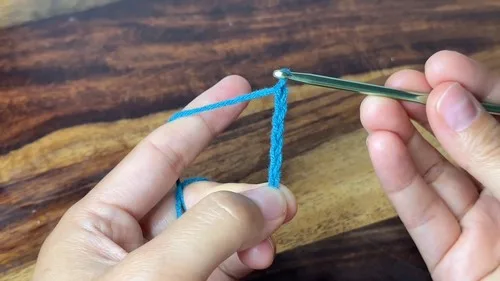
Chain any multiple of 10 + 7. For a sample, chain 37.
- Row 1
Single crochet in the second chain from the hook. Single crochet in the next chain.Skip 3 chains.Make 7 double crochets in the next chain.Skip 3 chains then make a single crochet in each of the next three chains.Continue this pattern across the row. At the end, skip 3 chains and make 4 double crochets in the last chain.
Rows 2 to 5 (Pattern Repeat)
- Row 2
Begin with a single crochet in each of the first two stitches. Chain 3. Work a double crochet seven together (dc7tog) over the next seven stitches.Chain one, slip stitch into the side and then into the base of the last double crochet.Single crochet in each of the next three stitches.Repeat from step 2 across the row.In the last four stitches, work a double crochet four together (dc4tog), yarn over and pull through all loops.Chain three and turn.
Key2
- dc4tog
- double crochet four together
- dc7tog
- double crochet seven together
- Row 3
In the first stitch, make 3 double crochets.Over the next three single crochets from the previous row, make one single crochet in each.In the center of the previous cluster, work 7 double crochets (forming a wheel).Repeat this across, finishing with a single crochet in each of the last two stitches.Switch to a different color if desired, pull up a loop, chain three, and turn.
- Row 4
Start with a double crochet three together (dc3tog). Chain one, slip stitch into the side and base.Single crochet in each of the next three stitches.Chain three, work a dc7tog followed by a chain one.Slip stitch into the side and the base then single crochet in the next three stitches.Repeat the sequence, finishing with a single crochet in each of the last two stitches.Chain one and turn.
Key2
- dc3tog
- double crochet three together
- dc7tog
- double crochet seven together
- Row 5
Begin with a single crochet in the first two stitches. Work 7 double crochets in the center of the previous wheel.Continue with three single crochets on top of the previous single crochets.Repeat the sequence across the row.At the row’s end, work 4 double crochets in the last stitch.Repeat Rows 2 to 5 until the project reaches the desired length.
To Continue To finish, you can end after an even row for a flat edge or add a simple border after an odd row.
Final Edge
Chain one, turn.
- Final Row
Start with a single crochet, half double crochet in each of the next two stitches, then three double crochets, two half double crochets, following the pattern across finishing with two double crochets in the last stitch.
Notes from the pattern
- Choose a hook that suits the chosen yarn weight rather than a fixed size, since the pattern is written to scale across various yarn weights and textures.
- Place a stitch marker at the start of each fan repeat in the early rows; the repeating skip-3, 7-double-crochet sequence is easy to lose track of over a long row.
- Keep tension consistent through the dc7tog rows in particular, since a loose decrease leaves gaps at the base of each wheel while a tight one causes the fabric to cup.
The essentials
- Rounds
- 7
- Parts
- 3
- Level
- Intermediate
- Time
- 4-6 hours
- Yarn
- Worsted
Stitches you will use
- Working multiple stitches into one stitch The 7-double-crochet fan at the start of each repeat needs the base stitch to stay open and undistorted; keep tension even so all seven stitches sit without crowding.
- Multi-stitch decrease (dc7tog) Row 2 gathers seven stitches into one with a dc7tog; count the stitches before working the decrease, since a miscount there throws off the fan spacing for the rest of the row.
- Reading a shaped edge row The final edge row mixes single, half double and double crochets across the same row to level the scalloped top; work it slowly and match each stitch type to the stitch beneath it rather than skipping ahead.
Troubleshooting
The piece cups instead of lying flat
This usually comes from a tight dc7tog decrease pulling the base of each wheel in too far. Loosen tension slightly on the decrease stitch and check the row is ending with the correct stitch count before starting the next repeat.
The fan shapes come out uneven in size
Uneven fans are almost always a skipped-stitch count error in the skip-3 sections between clusters. Recount the three skipped chains or stitches before each 7-double-crochet group rather than estimating by eye.
The final edge row does not sit level
A wavy top edge means the single, half double and double crochets in the Final Edge part were not matched to the correct stitch beneath them. Work back over the row and check each stitch type lines up with the peak or dip of the wheel below it.
Substituting yarn
- DK weight wool or wool-blend
- Produces a smaller, denser fan repeat with a firmer drape; pair with a smaller hook and expect the finished piece to run narrower for the same stitch count.
- Aran or chunky weight acrylic
- Enlarges the wheels and softens the definition between fans slightly; move up to a larger hook and expect faster growth per row, useful for a blanket-sized piece.
- Cotton or cotton-blend, worsted weight
- Gives crisper stitch definition on the fan shapes but less give in the fabric; a slightly larger hook than usual helps keep the dc7tog decrease from pulling too tight.
Washing and care
- Hand wash in cool water and lay the piece flat to dry, easing the scalloped edge into shape while damp so the wheels keep their intended curve rather than drying flat.
- Store folded rather than hung, since the open texture of the fan repeats can stretch out of shape under its own weight over time; reshape by gentle steaming if the wheels flatten between uses.
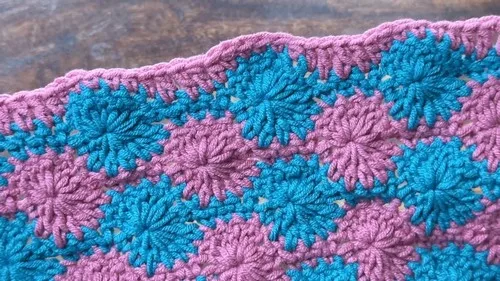
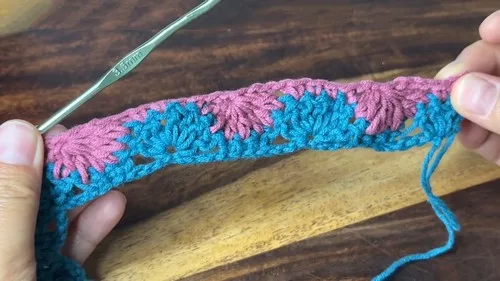
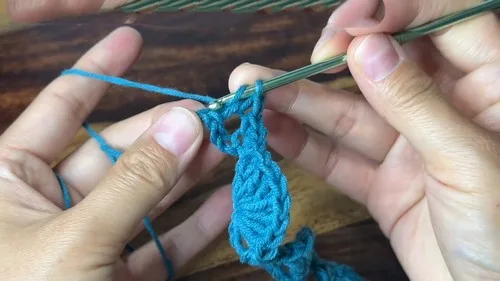
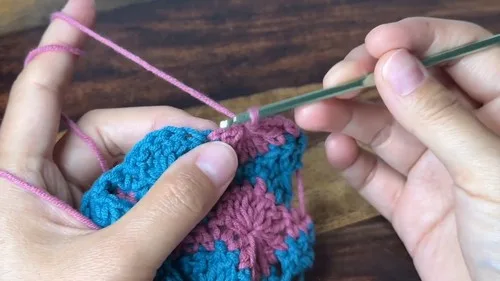
The photographs taken while this was being made
Every one was taken by whoever published the pattern, in the order the source listed them.
FAQs
Questions
What does Catherine Wheel stitch actually produce?
It produces a row of repeating fan or wheel shapes across a flat piece, created by alternating clusters of seven double crochets with a seven-stitch decrease. The overall look is scalloped and textured rather than flat.
Can this pattern be made in any yarn weight?
Yes, the materials list calls for yarn of various weights and textures with a hook suited to that yarn, so the pattern is not tied to one specific weight. Changing weight changes the finished size of each wheel and the overall dimensions.
Why does the pattern use dc7tog instead of separate decreases?
The dc7tog gathers all seven stitches of the previous fan into a single stitch at once, which is what creates the sharp point between each wheel. Working separate decreases instead would blur that point and change the texture.
Is the Final Edge part optional?
No, it is the row that levels out the scalloped top edge left by the last full repeat row. Skipping it leaves the top of the piece uneven rather than straight.
How many rows does the full repeat run to?
The pattern doesn't specify a fixed row count. Instead, Rows 2 to 5 are repeated until the piece reaches the desired length, then finished after an even row for a flat edge or with a simple border added after an odd row.
These answers came from whoever first published the pattern, kept word for word.