 EVERY CROCHET
 Blankets 5 rounds No account, no download
Easy double crochet blanket with woven accent trim
A double crochet (UK: treble) blanket pattern with US and UK terms given, plus a woven accent-colour trim.
- Skill
- Intermediate
- Time
- 4-6 hours
- Yarn weight
- Worsted
- Hook
- 5 mm

Intermediate
What the original write-up called it. Nothing here is graded again.

Worsted
What the sample was worked in. Any weight works; the size moves with it.

4-6 hours
What the original page reckoned. Your own pace is the one that matters.
About this pattern
A double crochet (UK: treble crochet) blanket built from a single foundation chain, worked in five rounds using a 5 mm hook and yarn in a base colour plus accent colours. The main body is straight double crochet rows to any length, followed by a woven accent-colour chain and a double crochet border with extra stitches at the corners. No shaping is involved, so the main skills needed are even tension and consistent stitch counting.
This blanket belongs to the double crochet (UK: treble crochet) family, the workhorse stitch behind most straightforward, densely-textured throws. Its plain rows build a fabric that is firm enough to hold its shape yet still soft to handle, which makes it a sensible choice for a first large-scale project or for anyone wanting a reliable, repeatable pattern rather than a complicated stitch chart.
Construction starts from a single foundation chain worked to whatever width is wanted, then proceeds row by row in double crochet until the piece reaches the desired length. Once the main body is finished, a separate chain in an accent colour is woven through the stitches for contrast, and a double crochet border worked around all four edges finishes the piece with a clean, defined edge.
Materials
- Yarn of your choice (base color and accent colors)
- 5 mm crochet hook
- Sewing needle
- Scissors
The list is the pattern's own wording.
Instructions
Every round is printed as the pattern wrote it, brackets and all. Open the key beside a round to see only the short forms that round uses.
Main Pattern
- Round 1
Create a slip knot and insert your crochet hook; Make a base chain to your desired width: for a small sample chain 18 (15 chains + 3 as turning chains), for a scarf chain 28 (25 + 3), for a blanket chain 103 (100 + 3).
- Round 2
(Double Crochet Row 1): Skip the first 3 chains from the hook (these count as your first dc); Yarn over, insert the hook into the 4th chain (back loop), yarn over and pull up a loop, yarn over and pull through two loops, yarn over and pull through the remaining two loops; Continue dc across the entire chain.
Key1
- dc
- Double Crochet
- Round 3
(Continue Pattern): Chain 3 (counts as the first dc of the next row), turn your work; Skip the first dc, make a dc into the second dc from the hook and each dc across; Repeat this step until your project reaches the desired length.
Key1
- dc
- Double Crochet
- Round 4
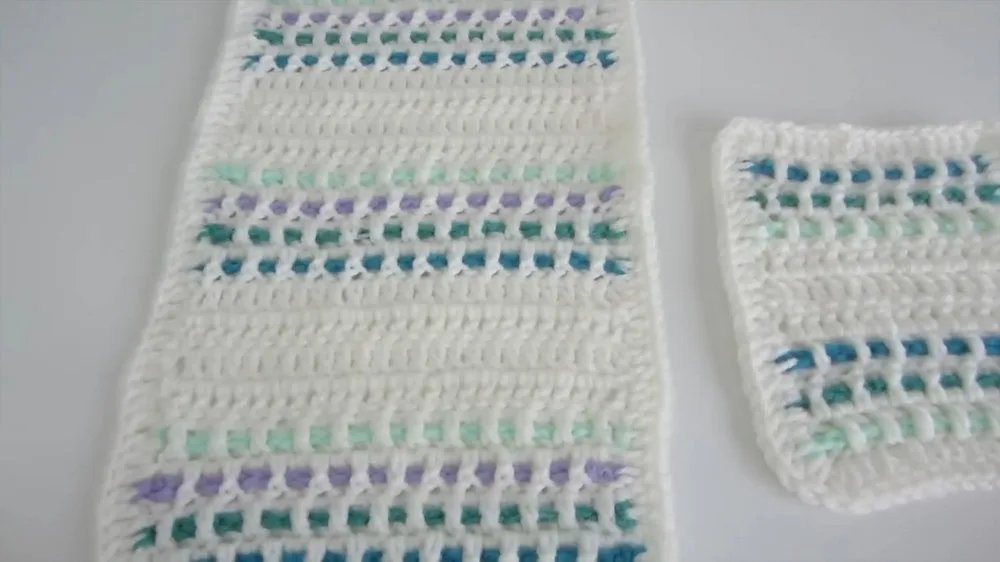
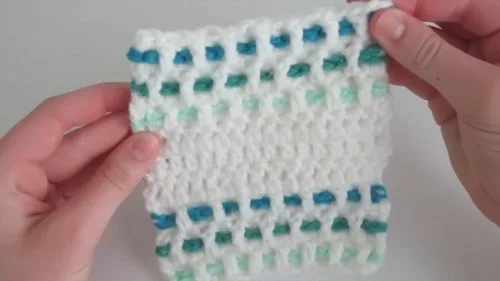
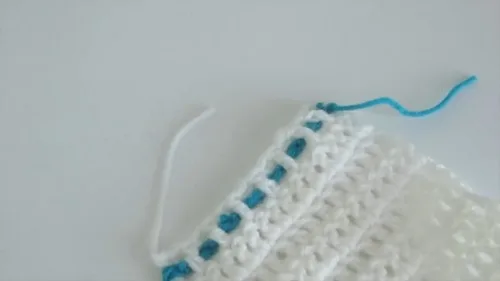
Adding Accent Color Weave Choose an accent color and make a slip knot; Chain 15 (or the base chain count - 3); Insert the hook in between two stitches from your base, sl st to attach the new chain; Weave this chain through the dc stitches (go under one dc and over the next, continue pattern across); Sew the ends of the chains to secure them in place.
Key2
- sl st
- Slip Stitch
- dc
- Double Crochet
- Round 5
Creating Border Insert your hook into any stitch at the edge, yarn over to attach your yarn and pull through to make a knot; Chain 3 (counts as first dc), then begin to dc all the way around the edge of the blanket; Do multiple dc in the corners to create a softer, rounder edge; Once you've gone around, sl st into the top of the starting chain 3 to join.
Key2
- sl st
- Slip Stitch
- dc
- Double Crochet
Making up
- Step 1Weave in all ends securely.
Notes from the pattern
- When adding the accent color weave and the border, you might find the edges wobble. To counter this, you can adjust the tension of your stitches slightly (tighter on the main color, somewhat looser on the accents).
The essentials
- Rounds
- 5
- Level
- Intermediate
- Time
- 4-6 hours
- Hook
- 5 mm
- Yarn
- Worsted
Stitches you will use
- Working into the correct loop Round 2 specifies inserting into the back loop of the starting chain; missing this changes the look of the first row, so check the loop before working the row.
- Counting turning chains Every row after the foundation begins with a chain 3 counted as the first double crochet; skipping the first stitch or double-counting it will drift the stitch count across rows.
- Weaving a chain through fabric The accent-colour chain in Round 4 is threaded over and under the double crochet stitches rather than crocheted into them, so keep tension even as it passes through or the weave will pucker.
Troubleshooting
The edges of the blanket ripple or wave
This usually comes from uneven tension between the main colour rows and the woven accent chain; work the base rows slightly tighter and the accent weave slightly looser, as suggested in the pattern notes.
The stitch count creeps up or down across rows.
This happens when the turning chain is missed or double-counted as a stitch; remember the chain 3 at the start of each row counts as the first double crochet, and the first actual double crochet goes into the second stitch from the hook.
The border puckers or pulls in at the corners.
A tight corner comes from too few stitches turning the corner; work multiple double crochet stitches into each corner, as instructed, to let the border spread and lie flat.
Substituting yarn
- Acrylic, worsted weight
- Matches the drape and stitch definition this pattern assumes; keep the 5 mm hook and the same chain counts, no size adjustment needed.
- Cotton, worsted weight
- Produces a heavier, less stretchy fabric with crisper stitch definition, useful for a warmer climate throw; the border may need a slightly larger hook to keep the edge from pulling tight.
- Wool blend, aran weight
- Gives a thicker, warmer blanket with softer drape; a 5.5-6 mm hook suits the heavier yarn better and will slightly reduce the number of stitches needed to reach the same width.
Washing and care
- Wash according to the fibre used for the main and accent yarns; acrylic and most wool blends do well on a gentle cold cycle, while cotton can generally take a warmer wash.
- Lay the blanket flat to dry and gently reshape the edges and corners by hand while damp, then store folded rather than hung to keep the border from stretching out of shape.
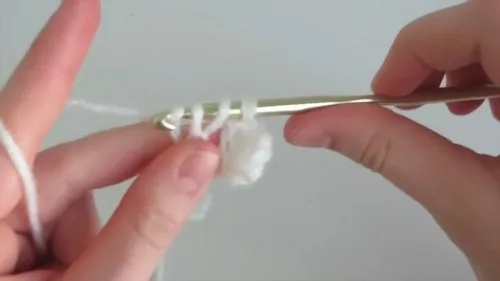
The photographs taken while this was being made
Every one was taken by whoever published the pattern, in the order the source listed them.
FAQs
Questions
Can the blanket be made in a smaller size?
Yes, the pattern gives a sample chain of 18 and a scarf-width chain of 28 alongside the full blanket chain of 103, so the same rows scale down without changes to the stitch pattern itself.
Is the woven accent chain crocheted into the blanket or added afterward?
It is made as a separate chain in the accent colour and then threaded over and under the existing double crochet stitches, rather than worked directly into the fabric. The ends are sewn in place once the weaving is complete.
What causes the accent weave to look uneven?
Inconsistent tension while pulling the chain through the stitches is the usual cause. Keep a steady, slightly looser tension on the accent chain than on the main colour rows, as the pattern notes suggest.
How is the border joined at the end?
After working double crochet all the way around, with extra stitches at each corner, the round is closed with a slip stitch into the top of the starting chain 3.
Does the base colour need to match the accent colour in weight?
The materials list allows any yarn of choice for both the base and accent colours, but keeping them the same weight makes the weaving in Round 4 sit evenly against the double crochet rows.
These answers came from whoever first published the pattern, kept word for word.