 EVERY CROCHET
 Accessories 4 rounds No account, no download
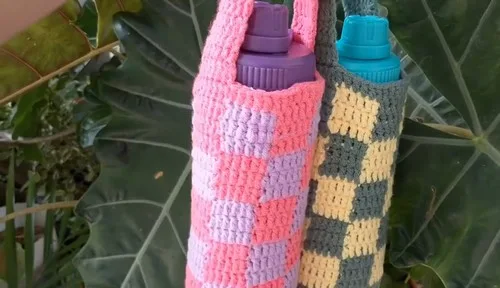
Crochet tumbler holder with a checkered colour pattern
A double crochet (UK: treble crochet) tumbler holder with checkered colour rounds and adjustable strap; both US and UK terms given.
- Skill
- Intermediate
- Time
- 4-6 hours
- Yarn weight
- Worsted

Intermediate
What the original write-up called it. Nothing here is graded again.

Worsted
What the sample was worked in. Any weight works; the size moves with it.

4-6 hours
What the original page reckoned. Your own pace is the one that matters.
About this pattern
This is a crochet tumbler holder worked in double crochet (UK: treble crochet) from a magic circle, shaped through three increase rounds, then turned at the base with a back-loop-only round before working straight rounds with colour changes every three rows for a checkered effect up to round twenty-two. A separate chained strap, adjustable in length, is stitched to both sides to finish.
This tumbler holder belongs to the double crochet (UK: treble crochet) family, the workhorse stitch behind most sturdy, fabric-like crochet pieces. Worked in the round from a magic circle, it grows into a compact, structured sleeve sized to hold a drink steady in one hand. The finished piece pairs practicality with a checkered colourwork panel, making it as suited to a gym bag as to a kitchen counter, and quick enough to finish in an evening or two.
Construction starts flat: twelve double crochets into a magic circle open into three rounds of even increases, shaping a neat base disc. A back-loop-only (BLO) round then marks the turn from base to side, giving the holder a defined edge before the sides rise in straight rounds. Colour changes every three rows build the checkered body up to round twenty-two, which closes in a single colour. A separately worked strap, chained to length and built up in short dc rows, is stitched to opposite sides once the holder is complete.
Materials
- Worsted weight yarn
- Crochet hook (size to suit your yarn)
The list is the pattern's own wording.
Instructions
Every round is printed as the pattern wrote it, brackets and all. Open the key beside a round to see only the short forms that round uses.
Main Pattern
- Round 2
Work 2 dc into each stitch around For Row 3 Do 1 dc in the first stitch, then 2 dc in the next stitch, repeat this pattern around
Key1
- dc
- double crochet
- Round 4
Do 2 dc in the first two stitches, then 2 dc in the next stitch, repeat this pattern around
Key1
- dc
- double crochet
- Round 5
Work dc in the back loop only (BLO) in each stitch around For Rows 6 to 21 Continue working dc in each stitchChange colors every 3 rows to form a checkered pattern
Key2
- blo
- back loops only
- dc
- double crochet
- Round 22
Complete with dc in each stitch using a single color Strap Pattern Chain to desired lengthWork 6 dc across each row for 16 rows (adjust for preferred strap length and width)
Key1
- dc
- double crochet
Assembly Leave a long tail at the end of the strap Sew both ends of the strap securely to opposite sides of the tumbler holder
Making up
- Step 1Leave a long tail at the end of the strap
- Step 2Sew both ends of the strap securely to opposite sides of the tumbler holder
Notes from the pattern
- Choose a hook that produces a firm, dense fabric rather than an open one, since this holder needs enough structure to hold a full tumbler upright on its own.
- Place a stitch marker at the start of each round from round 5 onward; continuous dc in the round has no natural break, and it is easy to lose the round count through the checkered section.
- Keep tension even across the three increase rounds at the base; an uneven increase there throws off the shape before the sides even begin.
The essentials
- Rounds
- 4
- Level
- Intermediate
- Time
- 4-6 hours
- Yarn
- Worsted
Stitches you will use
- Magic circle Used to open round 1 before working 12 dc into it; pull the tail snug afterwards so the centre closes without a gap.
- Back loop only (BLO) Worked once, in round 5, to mark the fold between base and side; picking the wrong loop here blurs the edge the whole piece relies on.
- Colour changes in the round Used every three rows through the striped section; join new colours at the start of a round and carry the resting yarn to avoid loose floats inside.
Troubleshooting
The base doesn't sit flat before the sides begin.
This usually means a stitch count drifted during one of the three increase rounds; recount stitches after each increase round and correct before starting the BLO round.
A visible ridge or gap appears where the colours change.
Colour was likely joined mid-round instead of at the start; always finish the round in progress, then join the new colour with the first stitch of the next round.
The strap twists or won't sit flat once sewn on.
This points to uneven strap rows or ends attached out of alignment; keep the 6 dc strap rows consistent across all 16 rows and pin both ends level before sewing them to the holder.
Substituting yarn
- Cotton, worsted weight
- Gives the firmest, sturdiest fabric for holding a tumbler upright; may need a slightly smaller hook than usual for cotton to keep the dc dense enough.
- Acrylic, worsted weight
- Softer and easier on the budget, with good colour saturation for the checkered contrast, though the BLO edge may need a light wash-and-block to sit flat.
- Cotton-acrylic blend, DK weight
- Lighter and more pliable than worsted; drop to a smaller hook and expect to work an extra round or two to reach a comparable base size.
Washing and care
- Hand wash in cool water to protect the crisp double crochet fabric and the colour blocks, then reshape the holder while still damp so the base sits flat and round.
- Lay flat to dry away from direct heat, and store the finished piece unfolded so the BLO fold line keeps its shape rather than creasing.
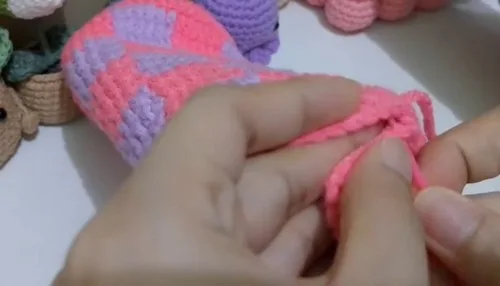
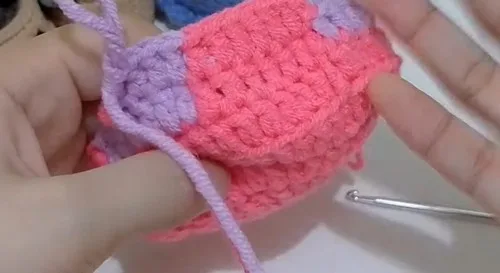
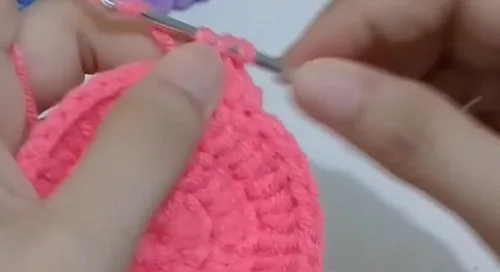
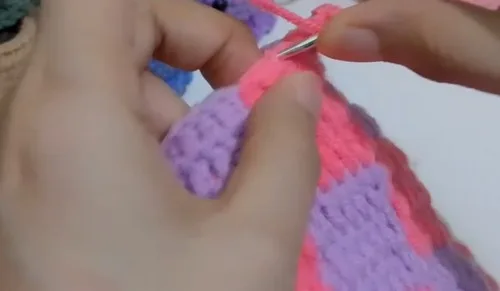
The photographs taken while this was being made
Every one was taken by whoever published the pattern, in the order the source listed them.
FAQs
Questions
What size tumbler will this holder fit?
The pattern is worked to a fixed stitch sequence, from 12 dc through three increase rounds, rather than to a stated diameter. Check the base against the actual tumbler after round 4, and adjust the number of straight rounds worked before round 22 if a taller or wider fit is needed.
Why is round 5 worked in the back loop only?
The single BLO round creates a defined ridge exactly where the base turns into the sides. Skipping it leaves the transition soft and rounded instead of crisp.
How is the strap length decided?
The strap is chained to whatever length suits the maker, then worked 6 dc across each row for 16 rows. Shorter chains give a snugger, wrist-close strap, while longer chains allow it to hang over a shoulder.
Can the checkered section be worked in a single colour instead?
Yes; the colour changes every three rows are a styling choice rather than a structural one. Working rounds 6 to 21 in one colour throughout produces the same shape without the checkerboard effect.
Does the holder need any stuffing?
No. It is worked as a single-layer dc sleeve sized to grip the tumbler directly, so no stuffing or lining is called for anywhere in the pattern.
These answers came from whoever first published the pattern, kept word for word.