 EVERY CROCHET
 Shawls & Wraps 6 rounds No account, no download
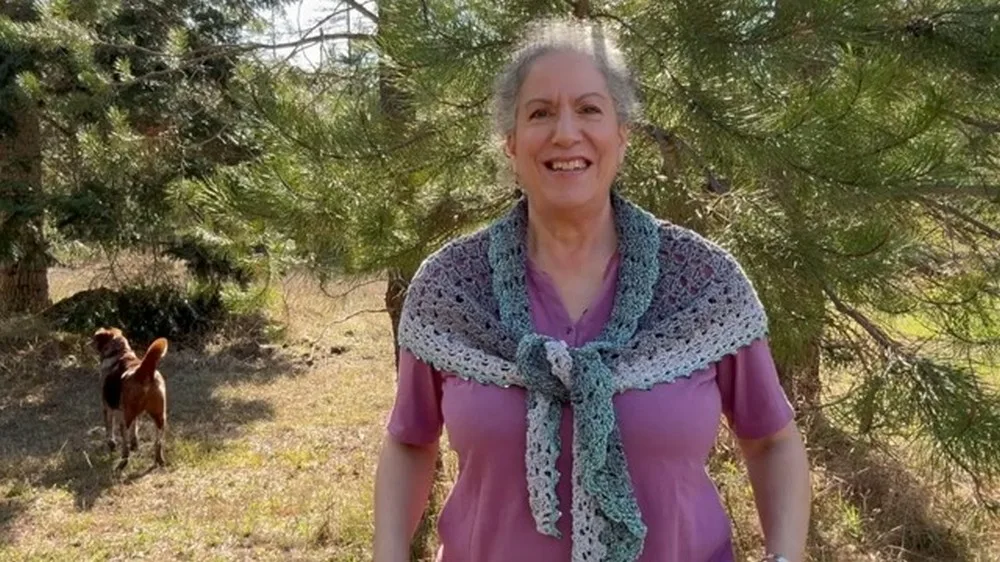
A corner-to-corner shawlette and cowl in double crochet blocks
A C2C shawlette and cowl built from double crochet (UK: treble crochet) blocks, with US and UK stitch names given throughout.
- Skill
- Beginner
- Time
- 6-8 hours
- Yarn weight
- Light (3)
- Hook
- 5 mm

Beginner
What the original write-up called it. Nothing here is graded again.

Light (3)
What the sample was worked in. Any weight works; the size moves with it.

6-8 hours
What the original page reckoned. Your own pace is the one that matters.
About this pattern
This is a triangular C2C shawlette, with a matching cowl option, built from repeated double crochet (UK: treble crochet) blocks that grow diagonally one block per row. It needs a light-weight yarn, an H/5 mm hook, and the patience to keep the tail oriented consistently across six rounds, plus a simple border and light blocking to finish.
This shawlette, and the cowl worked from the same base, belongs to the corner-to-corner (C2C) family of crochet, a technique built from small blocks of double crochet (UK: treble crochet) joined diagonally rather than row by row. Each block starts with a short chain and three stitches, giving the fabric the pixelated, graph-like look C2C is known for. The result is a triangular wrap with drape rather than structure, suited to a light-weight yarn and a soft hand.
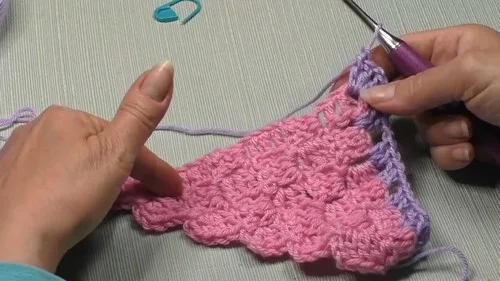
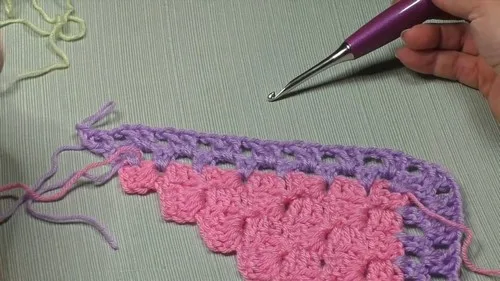
Construction begins at a single corner block and grows diagonally: each new row adds one more block than the last, joined to the previous row's chain-3 space with a slip stitch before three double crochets complete the new tile. The work is rotated after every row so the yarn tail stays at the bottom, which keeps the diagonal lines running true. Growth continues until the piece reaches the intended width, at which point a double crochet border frames the edge before the ends are fastened off and woven in.
Materials
- Light weight yarn (Recommendation: K Weight Number 3) – approximately 3.5 oz skeins.
- Crochet hook size H/5 mm (or size needed to obtain gauge or desired drape).
- Scissors and a yarn needle for weaving in ends.
Optional
- Beads for embellishment.
The list is the pattern's own wording.
Instructions
Every round is printed as the pattern wrote it, brackets and all. Open the key beside a round to see only the short forms that round uses.
Main Pattern
Always keep the tail of the yarn at the bottom to maintain the direction and alignment of the blocks.
Experiment with different yarn weights and hook sizes to achieve different textures and thicknesses.
- Round 1
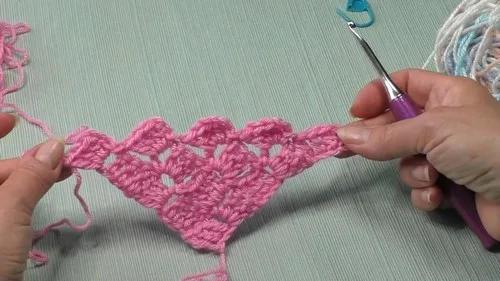
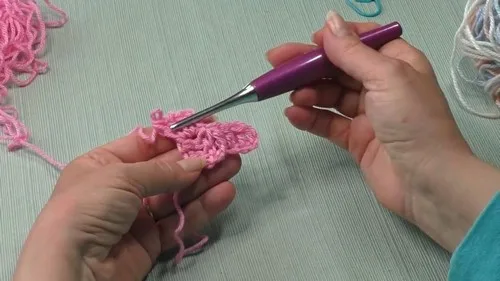
Start with a slip knot; chain 6, then double crochet in the fourth chain from the hook and in the next two chains; this forms your first "block" or "tile".
- Round 2
Building Blocks For each new block at the start of a row, chain 6, double crochet in the fourth chain from the hook and in the next two chains; rotate your work so the tail is at the bottom; slip stitch into the chain 3 space of the previous row's starting block; chain 3 (counts as a double crochet), and then make 3 more double crochets into the same space.
- Round 3
Continuing Rows Each row will increase by one block; continue creating blocks with chain 6 to start, and then proceed as above; join to the adjacent block with a slip stitch into the chain 3 space; complete each block by adding 3 double crochets into the same chain 3 space; rotate work as needed to keep the tail end on the bottom.
- Round 4
Adding Width and Fastening Ends Continue until the shawlette reaches a width that extends beyond your wingspan or desired final width.
- Round 5
Adding Borders Start the border by chaining 3 (counts as a double crochet) at the edge of the shawlette.
- Round 6
Border Row 1 2dc in the space between the blocks, chain 1, repeat to the edge, then start the scalloped edge with a chain 3.
Making up
- Step 1Add optional beads for embellishment during finishing, stringing or attaching them as desired.
- Step 2Cut and fasten off the yarn.
- Step 3Weave in all ends.
- Step 4Optional: Add fringe or tassels to the ends for a finished look.
- Step 5Lightly block the shawlette to enhance the drape and even out the stitches.
Notes from the pattern
- The pattern calls for an H/5 mm hook with a light-weight yarn (K Weight 3); going up a hook size will open the blocks and increase drape, which suits a shawl more than a cowl.
- Keeping the yarn tail at the bottom of the work on every row is the single detail that keeps the diagonal C2C lines straight; losing track of it is the most common source of skewed blocks.
- Because width is judged by wingspan rather than a fixed stitch count, it helps to try the piece around the shoulders every few rows rather than waiting until the border round.
- Beads are optional and are added during finishing rather than worked into the stitches, so they can be strung onto the yarn in advance or attached after blocking if a different placement is wanted.
- This shawlette can serve as a charming addition to your spring or autumn wardrobe, perfect for those slightly chilly mornings and evenings.
- It can be crafted from various yarn types and colors, including gradients for a fascinating color transition effect.
The essentials
- Rounds
- 6
- Level
- Beginner
- Time
- 6-8 hours
- Hook
- 5 mm
- Yarn
- Light (3)
Stitches you will use
- Corner-to-corner (C2C) block building Used throughout the main pattern; each block is a chain of 6 plus three double crochets, so watch that the starting chain is counted correctly at the start of every row.
- Diagonal increase and slip-stitch joining Appears from Round 2 onward where each new block joins the previous row's chain-3 space; a missed or doubled join will throw the diagonal out of line.
- Edge border in double crochet Used in the border round after the body reaches full width; keep the starting chain-3 consistent so the border sits flat against the block edge.
Troubleshooting
The blocks lean or the diagonal line
This usually means the tail end was not kept at the bottom on a row or two; unpick back to the last correct row and recheck orientation before continuing.
The shawlette edges curl rather than lying flat
This is typically tension that is slightly tight through the border round; work the border a little looser, then block the piece lightly to open the fabric and even out the stitches.
The finished width is narrower or wider than expected
Row count was judged by eye rather than by checking against wingspan as the rows were added; measure across the diagonal every few rows rather than only at the end.
Substituting yarn
- Cotton-blend, light/DK weight
- Gives a crisper, less stretchy block with sharper stitch definition; drape is reduced, so sizing may need an extra row or two to reach the same width.
- Mohair or silk-blend, lace to light weight
- Produces a softer, hazier block outline and a lighter overall piece; stitches are harder to count, so working with good lighting matters more than usual.
- Acrylic, light/worsted weight
- Holds its shape well and is easy to block repeatedly; it is heavier than natural fibres at the same gauge, which changes how the shawlette sits across the shoulders.
Washing and care
- Hand wash in cool water with a mild detergent and lay flat to dry, reshaping the triangle gently while damp so the blocked edges hold their line.
- Store folded rather than hung, since a light-weight shawlette can stretch out of shape over time if left on a hook or hanger.
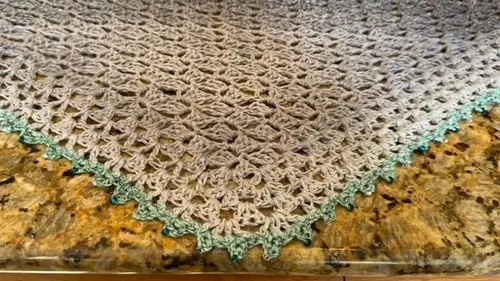
The photographs taken while this was being made
Every one was taken by whoever published the pattern, in the order the source listed them.
FAQs
Questions
What is C2C and how does it differ from ordinary double crochet rows?
C2C builds the fabric from small, self-contained blocks joined diagonally corner to corner, rather than working straight across in rows. Each block is its own short chain and set of double crochet (UK: treble crochet) stitches, which is what gives the fabric its graph-paper look.
How is the finished width decided?
The pattern grows one block per row until the diagonal reaches beyond the wearer's wingspan, so width is judged by trying the piece on rather than by a fixed row count. Checking the spread every few rows avoids finishing either too narrow or too wide.
Can this be worked as a cowl instead of a shawlette?
Yes; the same C2C block method is used for both, with the cowl simply joined into a loop rather than left open. The materials and stitch pattern are shared across both versions.
Does the hook size need to match exactly?
The H/5 mm hook is a starting point for the stated light-weight yarn, but any hook that gives the drape wanted for a shawl or cowl will work. A slightly larger hook opens the blocks and softens the fabric.
How are beads added, and do they affect the stitch count?
Beads are strung or attached during the finishing steps rather than worked into the double crochet blocks themselves, so they have no effect on stitch or row counts. They can be left out entirely without changing the construction.
These answers came from whoever first published the pattern, kept word for word.