 EVERY CROCHET
 Amigurumi 16 rounds No account, no download
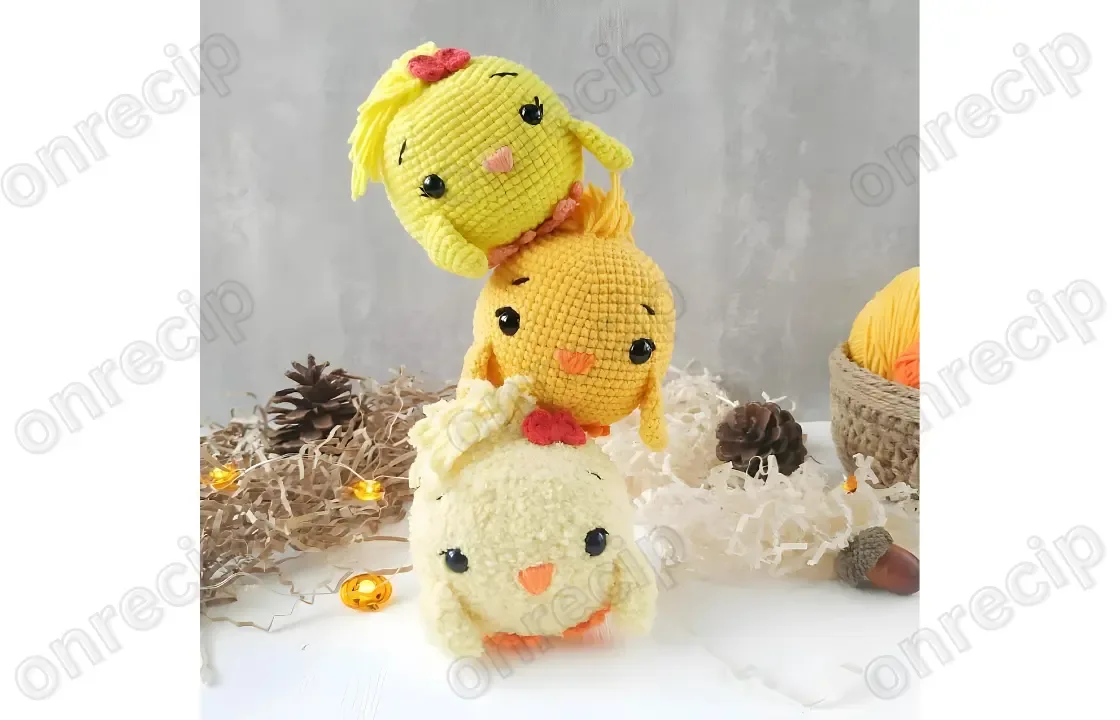
Amigurumi chick crochet pattern with safety eyes
Amigurumi chick worked in single crochet (UK double crochet); US and UK stitch terms both given throughout.
- Skill
- Intermediate
- Time
- 4-6 hours
- Yarn weight
- Fingering/Sport
- Hook
- 1.75 mm

Intermediate
What the original write-up called it. Nothing here is graded again.

Fingering/Sport
What the sample was worked in. Any weight works; the size moves with it.

4-6 hours
What the original page reckoned. Your own pace is the one that matters.
About this pattern
This is a one-piece amigurumi chick worked in single crochet (UK double crochet) over 16 rounds, shaped by increases through Rounds 6 to 9 before levelling off at 54 stitches. It needs a 1.75 mm hook for the body, a 2.0 mm hook for the bow, 9 mm safety eyes, fiberfill, and yellow, orange and red yarn for the body, beak and bow.
This chick is a small amigurumi figure built almost entirely from single crochet (UK double crochet), the dense stitch family that gives amigurumi its firm, poseable shell. The body is the single largest piece in the pattern, worked over 16 rounds, with the increase sequence from Round 6 to Round 9 doing the main shaping work before the stitch count settles.
The head and body are worked as one continuous piece rather than two parts joined afterwards, which keeps the silhouette smooth and avoids a visible seam at the neck. Shaping comes entirely from spaced increases worked into a continuous spiral, with the piece widening steadily from 36 stitches at Round 6 to 54 stitches by Round 9, then holding at 54 single crochet for Round 10 before the remaining rounds complete the form.
Materials
- for Amigurumi Chick
- Alize Cotton Gold or Alize Softy yarn: yellow for body
Alize Softy yarn
- orange and red
- 1.75 mm crochet hook and 2.0 mm for bow
- 9 mm safety eyes
- Black yarn or floss for embroidering eyebrows and lashes
- Sewing needle, scissors
- Sewing pins
- Fiberfill
The list is the pattern's own wording.
Instructions
Every round is printed as the pattern wrote it, brackets and all. Open the key beside a round to see only the short forms that round uses.
Head and body
- (36)Round 6
(4 sc, inc) repeat 6 times [36]
Key2
- inc
- increase
- sc
- single crochet
- (42)Round 7
(5 sc, inc) repeat 6 times [42]
Key2
- inc
- increase
- sc
- single crochet
- (48)Round 8
(6 sc, inc) repeat 6 times [48]
Key2
- inc
- increase
- sc
- single crochet
- (54)Round 9
(7 sc, inc) repeat 6 times [54]
Key2
- inc
- increase
- sc
- single crochet
- Round 10
54 sc
Key1
- sc
- single crochet
- (60)Round 11
(8 sc, inc) repeat 6 times [60]
Key2
- inc
- increase
- sc
- single crochet
- Rounds 12–13
60 sc (2 rows)
Key1
- sc
- single crochet
- (66)Round 14
(9 sc, inc) repeat 6 times [66]
Key2
- inc
- increase
- sc
- single crochet
- Rounds 15–20
66 sc (6 rows) Insert safety eyes between R 16 and R 17 at the distance of 12 sc from each other.
Key2
- sc
- single crochet
- R
- round
- (60)Round 21
(9 sc, dec) repeat 6 times [60]
Key2
- dec
- decrease
- sc
- single crochet
- Rounds 22–23
60 sc (2 rows)
Key1
- sc
- single crochet
- (54)Round 24
(8 sc, dec) repeat 6 times [54]
Key2
- dec
- decrease
- sc
- single crochet
- Round 25
54 sc
Key1
- sc
- single crochet
- (48)Round 26
(7 sc, dec) repeat 6 times [48]
Key2
- dec
- decrease
- sc
- single crochet
- (42)Round 27
(6 sc, dec) repeat 6 times [42]
Key2
- dec
- decrease
- sc
- single crochet
- Round 28
(5 sc, dec) repeat 6 times [36] Ready to Learn More? Open the next page for Further Guidance!
Key2
- dec
- decrease
- sc
- single crochet
Pages:
Notes from the pattern
- The 1.75 mm hook is for the main body; the 2.0 mm hook is used only for the bow, so keep both on hand and do not substitute one for the other.
- A stitch marker or short length of contrasting yarn in the first stitch of each round is essential, since the body is worked in a continuous spiral with no joining slip stitch to mark the round.
- Firm, even tension matters more than usual at this gauge; loose stitches will let the 9 mm safety eyes and fiberfill show through the fabric.
- Stuff the head and body gradually as the rounds are completed rather than all at once at the end, so the increases from Round 6 to 9 hold their shape instead of pulling tight.
The essentials
- Rounds
- 16
- Level
- Intermediate
- Time
- 4-6 hours
- Hook
- 1.75 mm
- Yarn
- Fingering/Sport
Stitches you will use
- Continuous spiral single crochet Used throughout the 16-round head and body; keep tension even so the spiral does not twist or leave a visible seam line.
- Spaced increases Rounds 6 to 9 each add six increases, raising the count from 36 to 54; placing increases directly above the previous round's increase keeps the shaping symmetrical.
Troubleshooting
The head and body look lumpy or uneven rather than round
This is usually inconsistent tension across the continuous spiral rather than a counting error; work a few practice rounds to settle into a steady grip before returning to the project.
The increase rounds (6 to 9) leave visible ridges or a stepped look
Increases that are not placed directly above the previous round's increase stitch will stack unevenly; recount from Round 6 and check each increase lines up vertically with the one below it.
The piece feels soft or sags after stuffing
This points to fiberfill added too sparingly or only at the final rounds; add small amounts continuously as each round is completed, particularly through the wider Rounds 9 and 10.
Substituting yarn
- Mercerised cotton, fingering weight
- Closest match to the original cotton yarn; produces the same crisp, low-fuzz stitch definition with no change to hook size or stuffing amount.
- Acrylic, sport weight
- Slightly softer drape and a touch more give than cotton; may need a hook a fraction smaller to keep stitches tight enough to hide fiberfill.
- Wool-blend, fingering weight
- Warmer handle and more elasticity, which can make the increase rounds stretch slightly wider; stuff a little more firmly to compensate.
Washing and care
- Hand wash the finished chick in cool water if the cotton yarn needs cleaning, then press out excess water in a towel rather than wringing, which protects the safety eyes and the shape of the bow.
- Dry flat away from direct heat and reshape the body gently while still damp so the Round 6 to 9 increases settle back into a smooth curve rather than drying stiff or lopsided.
FAQs
Questions
Can the body be made in a different colour from the pattern?
Yes, the yellow specified is for the body only, with orange and red reserved for the beak and bow detail. Any colour substitution should keep the same yarn weight so the stitch counts from Round 6 through Round 9 still fit correctly.
Why does the pattern call for two different hook sizes?
The 1.75 mm hook keeps the main body tight enough to hide the fiberfill and safety eye backs, while the 2.0 mm hook on the bow gives that smaller piece slightly more drape so it sits naturally rather than looking stiff.
Is a stitch marker really necessary for a 16-round piece?
Yes. Because the body is worked in a continuous spiral rather than joined rounds, there is no natural marker for where each round starts, and losing track becomes more likely exactly during the busy increase rounds from 6 to 9.
How much fiberfill does this chick need?
The materials list does not specify a weight, only that fiberfill is required, so the right amount is judged by feel: firm enough to hold the shape through the widest point at Round 9 and 10 without stretching the stitches.
Should the eyes be placed before or after stuffing?
The 9 mm safety eyes should go in before the body is closed and fully stuffed, while the fabric is still open enough to reach the backing discs from the inside.
These answers came from whoever first published the pattern, kept word for word.