 EVERY CROCHET
 Garments 7 rounds No account, no download
Easy mesh summer cardigan pattern for confident beginners
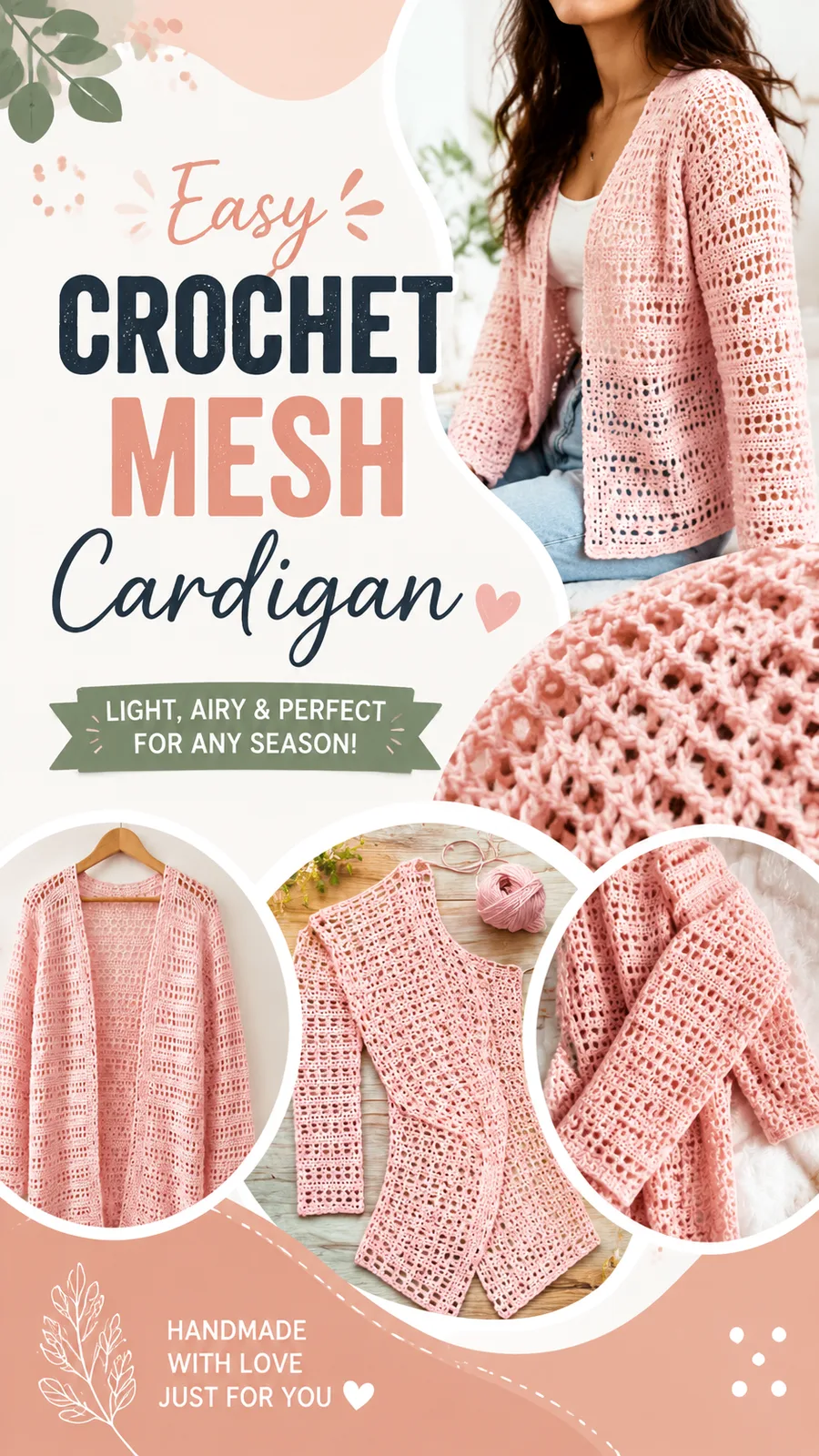
Written double crochet mesh cardigan pattern worked in flat panels, using US crochet terms, a 4.0 mm hook, and lightweight cotton yarn.
- Skill
- Confident Beginner
- Time
- 10-14 hours
- Yarn weight
- Light Worsted (DK)
- Hook
- 4.0 mm

Confident Beginner
What the original write-up called it. Nothing here is graded again.

Light Worsted (DK)
What the sample was worked in. Any weight works; the size moves with it.

10-14 hours
What the original page reckoned. Your own pace is the one that matters.
About this pattern
This is a written, flat-panel crochet cardigan worked in a mesh stitch of double crochet (dc) and chain spaces, using US crochet terms, a 4.0 mm (US G/6) hook, and lightweight cotton or cotton-blend yarn. The back panel, two front panels and two sleeves are worked separately, then seamed and edged. Suited to confident beginners, it depends on an accurate gauge swatch to match the stated finished measurements.
The Soft Breeze Mesh Cardigan is built from a simple mesh stitch pattern that alternates double crochet (dc) stitches with chain-two spaces, creating a grid of small open windows across the fabric. This stitch family sits between solid double crochet rows and fully open filet mesh, giving the fabric enough body to hold its shape as a layering piece while still allowing air to move through. The repeat is easy to read once established, making it a good showcase for a confident beginner moving into textured, openwork crochet. This pattern is written using US crochet terminology throughout.
Construction follows a flat-panel method rather than shaping in the round or top-down. One wide back panel, two matching front panels and two sleeves are each worked flat in rows, then seamed together before a neat edging finishes the front opening and hem. Working each section as a separate rectangle keeps row counts and chain totals easy to track, and makes it straightforward to lengthen or widen any panel to suit individual measurements before assembly begins.
Materials
- Lightweight (category 3) cotton or cotton-blend yarn, approximately 1,800 yards (1,646 meters)
- 4.0 mm US G/6 crochet hook
- Yarn needle for sewing and weaving ends
- Scissors
- Measuring tape
- Stitch markers
The list is the pattern's own wording.
Instructions
Every round is printed as the pattern wrote it, brackets and all. Open the key beside a round to see only the short forms that round uses.
Back Panel
Chain 89.
- Row 1
Dc in fourth ch from hook and each chain across. Turn. (87 dc)
Key2
- ch
- chain
- dc
- double crochet
- Row 2
Ch 3, dc in first stitch, ch 2, sk next 2 stitches, dc in next stitch. Repeat across until 3 stitches remain. Ch 2, sk 2 stitches, dc in last stitch. Turn.
Key3
- ch
- chain
- dc
- double crochet
- sk
- skip
- Row 3
Ch 3, dc in first stitch, dc in each dc stitch and ch-2 space across. Turn. (87 dc)Rows 4-80: Repeat Rows 2 and 3 alternately. Fasten off after Row 80. The finished back panel should measure approximately 20 inches (51 cm) wide and 22 inches (56 cm) long.
Key2
- ch
- chain
- dc
- double crochet
Front Panels
Make 2 identical pieces.
Chain 45.
- Row 1
Dc in fourth ch from hook and each chain across. Turn. (43 dc)
Key2
- ch
- chain
- dc
- double crochet
- Row 2
Ch 3, dc in first stitch, ch 2, sk next 2 stitches, dc in next stitch. Repeat across. Turn.
Key3
- ch
- chain
- dc
- double crochet
- sk
- skip
- Row 3
Ch 3, dc in first stitch, dc across working into each dc and chain space. Turn. (43 dc)Rows 4-80: Repeat Rows 2 and 3. Fasten off.
Key2
- ch
- chain
- dc
- double crochet
Sleeves
Make 2 sleeves.
Chain 57.
- Row 1
Dc in fourth chain from hook and across. Turn. (55 dc)Rows 2-50: Alternate the mesh repeat rows and solid rows as established for the body. Fasten off.
Key1
- dc
- double crochet
Each sleeve should measure approximately 14 inches (35.5 cm) wide before seaming.
Special Stitch
Mesh Repeat: Dc in next stitch, ch 2, skip next 2 stitches, dc in next stitch. Repeat across the row. This creates the open window texture.
Edging
Join yarn at the bottom front opening.
Work one round of sc evenly around the cardigan opening, neckline, and hem. Join with a sl st. Fasten off and weave in all ends.
Blocking
Lightly wet the finished cardigan and lay it flat to dry. Shape the panels evenly, paying special attention to sleeve length and side edges. Blocking helps open the mesh stitches and creates a polished garment shape.
Making up
- Step 1Place the back panel flat with the right side facing up.
- Step 2Attach each front panel along the shoulder edge, leaving a center neckline opening of approximately 10 inches (25 cm).
- Step 3Sew side seams from the bottom edge upward, leaving approximately 8 inches (20 cm) open for armholes.
- Step 4Fold each sleeve lengthwise and sew the sleeve seam.
- Step 5Attach sleeves into the armholes using a whip stitch or mattress stitch.
Notes from the pattern
- Use the 4.0 mm (US G/6) hook specified; a different hook changes the size of the mesh windows and the finished panel measurements.
- Place stitch markers at the start of mesh repeat rows to keep track of the ch-2, skip-2 sequence across long rows, especially on the 89-chain back panel.
- Work and measure a gauge swatch before starting, since the back panel's 20 x 22 inch size and the sleeve's 14 inch width depend on matching tension exactly.
- Lightweight cotton or cotton-blend yarn is recommended for drape and breathability; a denser or stretchier substitute will change how open the mesh windows sit.
- Finished size: Small/Medium base size, approximately 38 inches (96.5 cm) bust circumference.
- Gauge: 18 dc stitches and 10 rows measure approximately 4 inches (10 cm) worked in the mesh stitch pattern. Swatch first and adjust hook size if needed to match this gauge.
- Terminology: this pattern is written using US crochet terms.
- The pictured cardigan uses a soft pastel (blush) yarn that highlights the stitch definition; choose any lightweight cotton or cotton-blend color that suits your wardrobe, since the pattern itself does not require a specific shade.
- When working the open mesh, avoid crocheting too tightly. A relaxed hand creates a softer drape and helps the cardigan maintain its lightweight feel.
- To size up, increase the back panel width by adding chains in multiples of 3; to lengthen the cardigan, add more mesh and solid row repeats before finishing.
- shorter sleeves, reduce the sleeve row count; for a cropped style, remove rows evenly from all body panels.
- Measure the wearer across the fullest part of the bust and compare that measurement with the finished garment measurements. A relaxed cardigan usually benefits from positive ease for comfortable layering.
The essentials
- Rounds
- 7
- Parts
- 6
- Level
- Confident Beginner
- Time
- 10-14 hours
- Hook
- 4.0 mm
- Yarn
- Light Worsted (DK)
Stitches you will use
- Chain-space mesh pattern Appears throughout the mesh repeat rows on every panel; keep the ch-2 spaces and skipped stitches consistent so windows stay even in size.
- Reading stitches into chain spaces Used on the solid dc rows, where each dc is worked into both the previous dc and the ch-2 space; miscounting here shifts the stitch total away from the stated 87 or 43 dc.
- Panel seaming and edging Needed once the back panel, front panels and sleeves are complete; align row counts carefully so seams sit straight before the edging is added.
Troubleshooting
Uneven Mesh Holes
If the open spaces look inconsistent, check that every chain space is worked with the same tension. Counting stitches at the end of each row helps maintain straight edges.
Cardigan Feels Too Stiff
A stiff fabric usually means the yarn or hook combination is too firm. Try a slightly larger hook or a softer fiber blend to improve drape.
Substituting yarn
- Cotton or cotton-blend, light worsted/DK weight
- Matches the pattern as written; gives crisp stitch definition and good drape, keeping the mesh windows clearly open with the stated 4.0 mm hook.
- Bamboo-blend, light worsted weight
- Adds extra sheen and a softer, heavier drape; the fabric relaxes more, so the mesh windows may sit slightly wider at the same hook size.
- Soft acrylic, light worsted weight
- Easier care and more affordable; less drape than cotton means the mesh holds a firmer, more structured shape rather than falling softly.
Washing and care
- Handmade crochet garments look their best when the finishing details are carefully completed: weave in loose ends securely, reinforce seams, and block the cardigan before wearing.
- Wash gently by hand or on a delicate cycle, following the yarn label, since cotton and cotton-blend fibres can lose shape under rough handling.
- Lay the cardigan flat to dry and reshape the mesh panels while damp, then store it folded rather than hung to stop the open stitches from stretching out of shape.
FAQs
Questions
What hook size and yarn does this cardigan require?
The pattern uses a 4.0 mm (US G/6) crochet hook with a lightweight cotton or cotton-blend yarn. This combination keeps the mesh windows open while giving the fabric enough structure to wear as a layering piece.
How is the mesh texture created?
Alternating rows combine chain-two spaces with double crochet (dc) stitches, so solid rows and open rows stack to form small windows throughout the fabric. The effect is consistent across the back panel, front panels and sleeves.
Can the finished size be adjusted?
Yes; the flat-panel method uses simple rectangles, so each panel's starting chain and row count can be lengthened or widened to change the finished measurements. The back panel's 20 x 22 inch size and the sleeve's 14 inch width are the starting points given.
Why is a gauge swatch recommended before starting?
The stated measurements, such as the 87 dc across the back panel and the 14 inch sleeve width, only hold true if tension matches the pattern. A quick swatch confirms the hook and yarn combination before committing to the full panels.
What skill level is this pattern suited to?
It is listed as confident beginner level, since the mesh repeat is straightforward once established. The main skill involved is keeping stitch and chain counts accurate across long rows.
These answers came from whoever first published the pattern, kept word for word.